Why US Portfolios Benefit from 15% European Equity in 2026
Advertisements

A strategic 15% allocation to European equities is offering U.S. investors key diversification benefits and exposure to undervaluation in 2026.
Driven by shifting global market dynamics, corporate earnings momentum, and macroeconomic policy, this update highlights why allocating to European markets enhances portfolio resilience, lowers concentration risk, and boosts long-term growth.
The Strategic Case for European Equities
The financial landscape is constantly evolving, and savvy investors are always seeking opportunities for optimal growth and diversification. As we approach 2026, a significant shift in investment strategy is emerging, particularly for US-based portfolios.
A compelling argument is building for US investors to allocate a strategic portion, specifically 15%, of their portfolios to European equities. This isn't just about chasing returns; it's about robust portfolio construction.
This allocation aims to capitalize on distinct economic cycles, attractive valuations, and the potential for superior risk-adjusted returns that the European market is poised to offer.
The current economic climate in Europe, while having faced recent headwinds, shows clear signs of recovery and structural improvements. Policy initiatives and corporate adaptations are laying a solid foundation for future growth, making a 15% European equity allocation a timely consideration.
Economic Recovery and Growth Catalysts
Europe’s economy is demonstrating resilience, with key indicators pointing towards a sustained recovery. Fiscal stimulus measures and robust consumer spending are driving this upward trend.
Furthermore, significant investments in green energy and digital transformation are creating new avenues for corporate growth. These structural tailwinds are expected to accelerate earnings for European companies by 2026.
Analysts project an acceleration in European GDP growth over the next few years, outpacing some developed market counterparts. This economic buoyancy directly translates into a more favorable environment for equity performance, highlighting why US portfolios benefit from a 15% European equity allocation.
Attractive Valuations and Earnings Potential
One of the most persuasive arguments for increasing European equity exposure lies in current valuation disparities. European stocks, on average, trade at a discount compared to their US counterparts.
This valuation gap presents a significant opportunity for US investors seeking growth at a reasonable price. As European corporate earnings continue to improve, these valuations are likely to converge, driving capital appreciation.
Improved corporate governance and a focus on shareholder returns across European companies further enhance their appeal. These factors suggest that a 15% European equity allocation offers a compelling risk-reward profile.
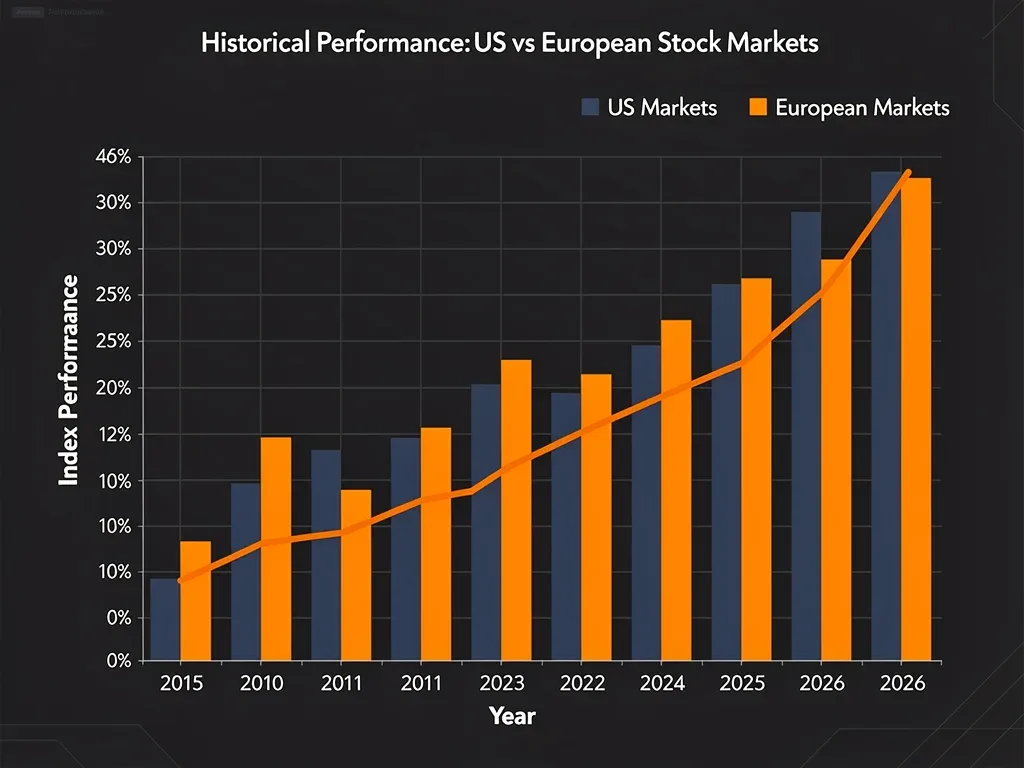
Many European companies are global leaders in their respective sectors, possessing strong competitive advantages and diversified revenue streams. Their ability to generate consistent earnings, even in challenging environments, makes them attractive components of a well-balanced portfolio.
Sector-Specific Opportunities
Within Europe, certain sectors are particularly well-positioned for growth and could be key drivers for why US portfolios benefit from a 15% European equity allocation. Technology, healthcare, and industrials are showing strong momentum.
Technology: European tech firms are innovating rapidly, especially in areas like AI, cybersecurity, and enterprise software.
Healthcare: Aging populations and advancements in medical research are fueling consistent demand and growth for European pharmaceutical and biotech companies.
Industrials: European industrial giants benefit from global infrastructure spending and a renewed focus on manufacturing efficiency.
These sectors offer diversified exposure and could provide significant upside potential. Identifying and investing in these high-growth areas within Europe will be crucial for maximizing returns from a 15% European equity allocation.
Diversification Benefits for US Portfolios
Diversification remains a cornerstone of prudent investment management, and European equities provide an excellent avenue for achieving this. Adding European exposure can reduce overall portfolio volatility.
This is because European markets often have a lower correlation with US markets, especially during periods of localized economic or political stress. By spreading investments across different geographies, investors can mitigate risks inherent in a concentrated portfolio.
A 15% European equity allocation helps to capture growth opportunities that may not be present solely within the US market. This geographical diversification is a key component of a resilient investment strategy.

Moreover, currency diversification also plays a role. Investing in European equities exposes US investors to the Euro, which can provide a hedge against potential dollar weakness. This dual benefit of market and currency diversification underscores why US portfolios benefit from a 15% European equity allocation.
Reduced Geopolitical Risks and Stability
While Europe has its own geopolitical complexities, the overall stability of the European Union and its member states provides a relatively secure investment environment. The EU's robust institutional framework and commitment to economic integration contribute to this stability.
Compared to some emerging markets, European countries offer a higher degree of political and economic predictability. This stability is attractive for US investors looking to balance higher-growth, higher-risk allocations with more dependable assets.
The long-term commitment to multilateralism and international trade within Europe further supports a stable investment climate. This makes a 15% European equity allocation a strategic move for risk management.
Macroeconomic Tailwinds and Policy Support
European policymakers are actively implementing measures to foster economic growth and stability. The European Central Bank's monetary policies, for instance, are designed to support recovery and maintain price stability.
Additionally, the EU's recovery fund initiatives are channeling substantial investments into key areas like digitalization and sustainability. These policy supports create a favorable environment for businesses to thrive.
The commitment to a greener economy also positions Europe as a leader in sustainable finance, attracting environmentally conscious investors. These macroeconomic tailwinds are vital in understanding why US portfolios benefit from a 15% European equity allocation.
Technological Advancement and Innovation
Europe is a hotbed of innovation, with numerous research and development hubs driving technological progress. From advanced manufacturing to cutting-edge biotechnology, European companies are at the forefront of many industries.
The region's strong educational institutions and skilled workforce contribute to a vibrant innovation ecosystem. This translates into a pipeline of new products, services, and business models that can drive significant corporate earnings.
Investing in European equities allows US investors to tap into this innovative spirit and benefit from the growth of these forward-thinking companies. This aspect further solidifies the case for a 15% European equity allocation.
Inflation Dynamics and Interest Rate Outlook
Understanding inflation trends and interest rate policies is crucial for any investment decision. Europe's inflation dynamics, while elevated, are showing signs of moderating, which could lead to a more accommodative monetary policy from the ECB.
A more stable interest rate environment can be beneficial for equity markets, as it reduces borrowing costs for companies and makes future earnings more predictable. This contrasts with potentially higher interest rate volatility in other regions.
The outlook for European interest rates by 2026 suggests a supportive backdrop for equity valuations. This favorable financial environment is another reason why US portfolios benefit from a 15% European equity allocation.
Currency Strength and Exchange Rate Advantages
The long-term trajectory of the Euro against the US Dollar is an important consideration for US investors. A stronger Euro can enhance returns for US investors holding European assets.
While currency movements are inherently volatile, the underlying economic strength and policy coherence of the Eurozone provide a foundation for potential Euro appreciation. This can act as an additional return driver for a 15% European equity allocation.
Strategic timing of investments, taking into account exchange rate forecasts, can further optimize returns. This currency play adds another layer of potential benefit for US portfolios.
Long-Term Growth Drivers and Demographic Shifts
Europe's demographic profile, while presenting some challenges, also offers unique investment opportunities. An aging population, for instance, drives demand for healthcare, pharmaceuticals, and specialized services.
Furthermore, European countries are actively addressing workforce challenges through immigration policies and educational reforms. These long-term demographic shifts create stable demand for certain industries and services.
The continent's commitment to social welfare and high living standards also supports consumer spending. These enduring growth drivers reinforce why US portfolios benefit from a 15% European equity allocation over the long term.
ESG Integration and Sustainable Investing
Europe is a global leader in ESG integration and sustainable investing. A significant portion of European companies are highly rated on ESG metrics, reflecting a strong commitment to sustainability.
For US investors increasingly focused on sustainable investment practices, European equities offer a vast universe of options. This alignment with ESG principles can attract capital and enhance long-term performance.
Investing in European companies with strong ESG credentials not only aligns with ethical considerations but also often correlates with better financial performance and reduced regulatory risks. This makes a 15% European equity allocation attractive for responsible investors.
Key Benefit | Description |
|---|---|
Valuation Gap | European stocks trade at a discount, offering potential for capital appreciation. |
Economic Recovery | Europe's economy shows signs of sustained growth, boosting corporate earnings. |
Diversification | Reduces portfolio volatility and captures non-correlated market movements. |
Policy Support | EU initiatives and ECB policies foster a favorable business environment. |
Frequently Asked Questions About European Equity Allocation
Why is 2026 a key year for European equity allocation?▼
By 2026, European economic recovery is expected to mature, coupled with sustained corporate earnings growth and a potential closing of valuation gaps relative to US markets. This timing allows investors to capitalize on established trends rather than speculative early-stage recovery.
How does European equity reduce US portfolio risk?▼
European equities often exhibit lower correlation with US markets, meaning they may perform differently during periods of US market volatility. This diversification helps spread risk across different economic cycles and geopolitical landscapes, enhancing overall portfolio stability.
What sectors in Europe offer the most potential?▼
Sectors like technology, healthcare, industrials, and sustainable energy are poised for significant growth in Europe. These areas benefit from strong innovation, demographic trends, and substantial government and private sector investment, making them attractive for a 15% European equity allocation.
Are there currency risks associated with European investments?▼
Yes, currency fluctuations between the Euro and the US Dollar can impact returns. However, a strategic allocation can also offer currency diversification, potentially hedging against dollar weakness. Investors can consider currency-hedged ETFs to mitigate this risk if desired.
What role do ESG factors play in European equity investing?▼
Europe leads globally in ESG integration, with many companies demonstrating strong sustainability practices. Investing in these firms aligns with responsible investing goals and can also correlate with better long-term financial performance and reduced regulatory exposure, enhancing the appeal of a 15% European equity allocation.
Perspectives
The analysis strongly suggests that a strategic 15% European equity allocation by 2026 is not merely an opportunistic play but a fundamental component for enhancing US portfolio resilience and growth.
To understand the macroeconomic drivers, earnings cycles, and structural tailwinds behind this momentum, see this in-depth analysis on why European equities have rallied in 2026.
Investors should monitor economic indicators, policy developments, and corporate earnings reports from Europe closely. This proactive approach will allow for timely adjustments, ensuring that US portfolios benefit from a 15% European equity allocation effectively and sustainably in the years to come.