2026 Guide to Understanding Your Student Aid Report (SAR)
Advertisements
The 2026 Student Aid Report (SAR) is crucial for college funding. This guide offers key educational insights, helping students and families understand their financial aid eligibility and necessary next steps. Learn how to interpret your SAR and leverage it effectively for educational opportunities.
The 2026 Guide to Understanding Your Student Aid Report (SAR): Key Educational Insights is shaping today’s agenda with new details released by officials and industry sources. This update prioritizes what changed, why it matters and what to watch next, in a straightforward news format.
Understanding your Student Aid Report (SAR) is a critical step in securing financial aid for college. This document summarizes the information you provided on your Free Application for Federal Student Aid (FAFSA) and provides crucial details about your eligibility for federal student aid programs.
For the 2026-2027 academic year, students and families need to be well-informed about the nuances of the Student Aid Report (SAR). Staying updated on these changes ensures you can effectively plan for educational expenses and take full advantage of available funding.
Understanding the 2026 Student Aid Report (SAR) Basics
The Student Aid Report (SAR) serves as a summary of the data submitted through your FAFSA. It is not an offer of financial aid itself, but rather a document that colleges use to determine your eligibility for various aid packages.
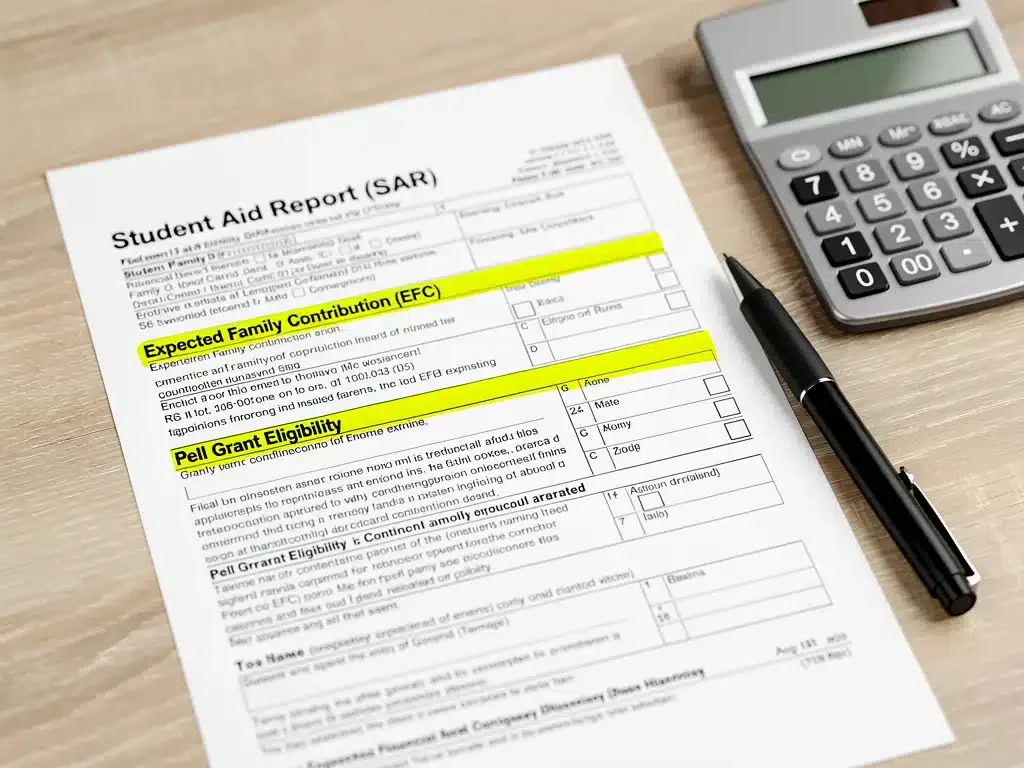
This report details your Expected Family Contribution (EFC), now known as the Student Aid Index (SAI), and outlines your Pell Grant eligibility. Familiarizing yourself with each section of the Student Aid Report (SAR) is fundamental for financial planning.
It is imperative to review your Student Aid Report (SAR) for accuracy as soon as you receive it. Any discrepancies or errors could significantly impact the amount of financial aid you are offered, requiring prompt correction to avoid delays.
What is the Student Aid Index (SAI)?
The Student Aid Index (SAI) is a significant change introduced to simplify financial aid calculations. It replaces the Expected Family Contribution (EFC) and is a number used by schools to determine your eligibility for federal student aid.
Unlike the EFC, the SAI can be a negative number, providing a more comprehensive view of a student’s financial need. This new metric aims to offer a clearer, more equitable assessment of a family’s ability to contribute to college costs.
Understanding your SAI is crucial because it directly influences the types and amounts of federal aid you may receive. A lower SAI generally indicates a higher financial need, potentially leading to more substantial aid packages from institutions.
Key Sections of Your 2026 SAR
Your Student Aid Report (SAR) will include several critical sections that demand careful attention. These sections provide a holistic view of your financial aid application and status, guiding your next steps in the process.
It will display your personal information, the data you reported on your FAFSA, and your calculated Student Aid Index (SAI). Additionally, it will highlight any issues or comments that require further action or clarification from your end.
Pay close attention to the data release number, which you will need if you contact the Federal Student Aid Information Center. This number uniquely identifies your application and is essential for any follow-up inquiries.
Accessing and Reviewing Your 2026 Student Aid Report (SAR)
Once your FAFSA has been processed, you will receive an email notification indicating that your Student Aid Report (SAR) is available. This notification will direct you to the Federal Student Aid website to view and download your report.
It is vital to access your Student Aid Report (SAR) promptly to review all details for accuracy. Delays in checking or correcting information can lead to missed deadlines or reduced aid eligibility, impacting your educational plans.
Students who did not provide an email address on their FAFSA will receive a paper copy of their Student Aid Report (SAR) by mail. Regardless of delivery method, the responsibility for careful review remains paramount.
How to Access Your SAR Online
Accessing your Student Aid Report (SAR) online is a straightforward process through the Federal Student Aid website. You will need your FSA ID to log in securely and retrieve your personalized report.
Upon logging in, navigate to the section that displays your FAFSA submission status and processed documents. From there, you should be able to view, print, or download your complete Student Aid Report (SAR).
Keeping a digital or physical copy of your SAR is highly recommended for your records. This ensures you have ready access to all the critical financial aid information throughout your college application journey.
What to Check for Accuracy
Thoroughly reviewing your Student Aid Report (SAR) for accuracy is non-negotiable. Even minor errors can have significant implications for your financial aid package, so meticulous attention to detail is essential.
Verify all personal information, including your name, date of birth, and Social Security number. Double-check your reported income, assets, and tax information against your financial documents to ensure consistency.
Also, confirm that the schools you listed on your FAFSA are correctly displayed. Any discrepancies in these areas require immediate correction to prevent delays in receiving your financial aid offers.
Correcting Errors on Your 2026 Student Aid Report (SAR)
Finding an error on your Student Aid Report (SAR) can be concerning, but it is a common occurrence. The good news is that most errors can be corrected, ensuring your financial aid eligibility is accurately assessed.
The process for making corrections depends on the type of error and when you discover it. Understanding the correct procedure for amending your FAFSA data is crucial for a smooth financial aid application.
Promptly addressing any inaccuracies on your Student Aid Report (SAR) is key to avoiding delays in receiving financial aid. Colleges rely on this report to craft their aid packages, so accuracy is paramount.
Online Corrections through FAFSA
For most students, the easiest way to correct errors on your Student Aid Report (SAR) is by logging back into your FAFSA online. You can access your submitted application and make necessary amendments.
Once logged in, look for the option to ‘Make FAFSA Corrections’ and follow the guided steps. This method is generally quicker and allows for immediate submission of updated information, which then generates a revised Student Aid Report (SAR).
Ensure you save and resubmit your FAFSA after making corrections. You will receive a confirmation email once the changes are processed, and a new Student Aid Report (SAR) will be made available.
Contacting Your College Financial Aid Office
In some cases, particularly for more complex errors or specific circumstances, it might be beneficial to contact the financial aid office of the colleges you are applying to. They can offer guidance on the best way to proceed.
The financial aid staff can provide insights into how certain corrections might impact your aid eligibility and can sometimes make adjustments directly on their end. Their expertise is invaluable when navigating intricate financial aid issues.
Always keep a record of your communications with financial aid offices, including dates, names, and summaries of discussions. This documentation can be helpful if any further questions arise regarding your Student Aid Report (SAR).
Impact of the 2026 Student Aid Report (SAR) on Aid Eligibility
The information contained within your Student Aid Report (SAR) directly dictates your eligibility for various federal, state, and institutional financial aid programs. Its accuracy is therefore paramount to maximizing your funding opportunities.
Your calculated Student Aid Index (SAI) is the primary factor colleges use to determine your need-based aid. A lower SAI indicates a greater financial need, potentially unlocking more grants, scholarships, and subsidized loans.
Understanding how your Student Aid Report (SAR) translates into aid offers is critical for making informed decisions about college affordability. It bridges the gap between your FAFSA data and the financial support you might receive.

Federal Pell Grant Eligibility
The Federal Pell Grant is a cornerstone of federal student aid, primarily awarded to undergraduate students with exceptional financial need. Your Student Aid Report (SAR) will clearly indicate your eligibility for this grant.
Pell Grant eligibility is directly tied to your Student Aid Index (SAI). The lower your SAI, the more likely you are to qualify for the maximum Pell Grant award, which does not need to be repaid.
Reviewing this section of your Student Aid Report (SAR) is crucial, as Pell Grants can significantly reduce the out-of-pocket cost of attending college. It’s a non-repayable form of aid that can make a substantial difference.
Other Federal and State Aid
Beyond the Pell Grant, your Student Aid Report (SAR) also influences your eligibility for other federal aid programs, such as Federal Supplemental Educational Opportunity Grants (FSEOG) and Federal Work-Study.
Many states also utilize FAFSA data, and consequently your Student Aid Report (SAR), to award their own state-specific financial aid programs. These can include grants, scholarships, and tuition waivers tailored to residents.
Each college will use your SAR to construct its institutional financial aid package, which may include grants, scholarships, and loans from the school itself. This comprehensive approach underscores the SAR’s broad impact.
Understanding Your Aid Offer Letter
After your Student Aid Report (SAR) has been processed and sent to the colleges you listed, each institution will then send you an aid offer letter. This letter details the specific financial aid they are offering you.
It is essential to compare aid offer letters from different schools, as the composition of grants, scholarships, and loans can vary significantly. This comparison allows you to make an informed decision about the most affordable option.
The aid offer letter will break down the cost of attendance and how the offered aid covers those costs. Understanding these details, in conjunction with your Student Aid Report (SAR), is fundamental for college planning.
Comparing Aid Offers
Comparing aid offers involves more than just looking at the total amount of aid. You need to differentiate between ‘gift aid’ (grants and scholarships that don’t need to be repaid) and ‘self-help aid’ (loans and work-study).
A higher proportion of gift aid typically indicates a more favorable offer, as it reduces your overall debt burden. Carefully analyze the terms and conditions of any loans offered, including interest rates and repayment schedules.
Consider the net price, which is the cost of attendance minus grants and scholarships, when evaluating offers. This figure provides the most accurate representation of what you will actually pay for college after factoring in your Student Aid Report (SAR) based aid.
Negotiating Your Financial Aid Package
It is sometimes possible to negotiate your financial aid package, especially if you have received a more generous offer from another institution. This process is known as a financial aid appeal.
To appeal, you will typically need to demonstrate a significant change in your family’s financial circumstances since filing the FAFSA, or highlight a compelling offer from a competing school. Your Student Aid Report (SAR) will be a foundational document in this appeal.
Contact the financial aid office directly to understand their appeal process and what documentation they require. A well-reasoned appeal, backed by supporting evidence, can sometimes lead to an improved aid package.
Important Dates and Deadlines for 2026 SAR
Staying on top of important dates and deadlines is crucial for a successful financial aid application process. Missing a deadline can result in reduced aid eligibility or even the complete loss of certain funding opportunities.
While the FAFSA typically opens in October, the specific processing times for your Student Aid Report (SAR) can vary. It is wise to submit your FAFSA as early as possible to ensure ample time for review and corrections.
Colleges and states often have their own priority deadlines for financial aid, which are separate from federal deadlines. Always consult the websites of your prospective schools and state aid agencies for their specific requirements.

FAFSA Submission and Processing Timelines
The FAFSA for the 2026-2027 academic year will generally open in October 2025. Submitting your application close to this opening date is highly recommended, as some aid is awarded on a first-come, first-served basis.
Once submitted, it typically takes 3-5 business days for your FAFSA to be processed and your Student Aid Report (SAR) to become available online. Paper FAFSA submissions may take several weeks longer.
Monitor your email for notifications from Federal Student Aid regarding your FAFSA processing and the availability of your Student Aid Report (SAR). Timely review allows for any necessary corrections without pressure.
State and Institutional Deadlines
Beyond federal deadlines, states and individual colleges often have their own specific financial aid deadlines. These can be crucial for accessing state grants and institutional scholarships.
Some state aid programs have very early deadlines, sometimes as early as November or December of the year prior to enrollment. Failing to meet these can mean missing out on significant funding specific to your state.
Always consult the financial aid pages of each college you are considering. Their websites will provide detailed information on their priority deadlines for submitting the FAFSA and any additional required forms, all of which rely on your Student Aid Report (SAR) information.
Maximizing Your Financial Aid Opportunities with SAR
A thorough understanding of your Student Aid Report (SAR) is the foundation for maximizing your financial aid opportunities. It empowers you to proactively manage your application and address any potential issues.
By carefully reviewing and correcting your SAR, you ensure that your financial need is accurately represented to colleges. This accuracy directly influences the generosity and appropriateness of the aid packages you receive.
Leveraging the insights from your Student Aid Report (SAR) allows you to engage effectively with financial aid offices, ask informed questions, and even appeal for more aid if your circumstances warrant it.
Proactive Steps for Students and Families
Students and families should begin preparing for the FAFSA well in advance of the opening date. This includes gathering necessary financial documents such as tax returns and bank statements.
Submitting the FAFSA early ensures that your Student Aid Report (SAR) is processed promptly, giving you ample time to review it and make any necessary corrections before college and state deadlines.
Maintaining open communication with college financial aid offices and actively seeking out additional scholarship opportunities can further enhance your aid package, building upon the foundation provided by your Student Aid Report (SAR).
Seeking Professional Guidance
Navigating the complexities of financial aid can be challenging, and sometimes seeking professional guidance can be beneficial. Financial aid advisors or counselors can offer personalized support.
These professionals can help interpret your Student Aid Report (SAR), advise on the best strategies for maximizing aid, and assist with the appeal process if necessary. Their expertise can be invaluable in securing the best possible financial outcome.
Many high schools offer college and financial aid counseling services, and non-profit organizations also provide free or low-cost assistance. Do not hesitate to utilize these resources to gain a clearer understanding of your Student Aid Report (SAR) and overall financial aid landscape.
| Key Aspect | Brief Description |
|---|---|
| SAR Purpose | Summarizes FAFSA data, determines aid eligibility for colleges. |
| Student Aid Index (SAI) | Replaces EFC; calculation for financial need, can be negative. |
| Review for Accuracy | Crucial to check all personal and financial data for errors. |
| Aid Offer Impact | SAR directly influences federal, state, and institutional aid packages. |
Frequently Asked Questions About the 2026 Student Aid Report (SAR)
What is the main purpose of the Student Aid Report (SAR)?▼The main purpose of the Student Aid Report (SAR) is to summarize the information you submitted on your FAFSA. It provides key details like your Student Aid Index (SAI) and Pell Grant eligibility, which colleges use to determine your financial aid package. It’s a crucial step in the financial aid process for any student.
How does the Student Aid Index (SAI) differ from the EFC?▼The Student Aid Index (SAI) replaces the Expected Family Contribution (EFC) starting in 2024-2025. Unlike the EFC, the SAI can be a negative number, providing a more precise measure of financial need. This change aims to offer a clearer and fairer assessment of a family’s ability to contribute to college costs, which is reflected in your Student Aid Report (SAR).
What should I do if I find an error on my Student Aid Report (SAR)?▼If you find an error on your Student Aid Report (SAR), you should correct it immediately. The easiest way is to log back into your FAFSA online and make the necessary amendments. For complex issues, contacting your college’s financial aid office can provide additional guidance and support, ensuring your aid eligibility is accurate.
When will I receive my 2026 Student Aid Report (SAR)?▼After you submit your FAFSA for the 2026-2027 academic year, which typically opens in October 2025, your Student Aid Report (SAR) will usually be available online within 3-5 business days. You will receive an email notification when it’s ready. Prompt submission of your FAFSA ensures timely access to your SAR.
Can I appeal my financial aid offer based on my SAR?▼Yes, you can appeal your financial aid offer, especially if your family’s financial circumstances have changed significantly since filing the FAFSA or if you have a more generous offer from another school. Your Student Aid Report (SAR) will be a foundational document for this appeal. Contact the financial aid office to understand their specific appeal process and required documentation.
Looking Ahead: Maximizing Your Educational Funding
The 2026 Student Aid Report (SAR) remains a pivotal document in the journey toward higher education. Its insights directly influence financial aid accessibility and affordability, underscoring the importance of meticulous review and timely action. As students and families prepare for the upcoming academic year, proactively engaging with the SAR’s details and understanding the implications of the Student Aid Index (SAI) will be key. This proactive approach ensures that every available funding opportunity is explored, translating into more informed decisions for a secure educational future.