State-Specific Family Leave Benefits 2026: What 11 States Offer
Advertisements
As paid family leave mandates expand across the nation, understanding state-by-state variations is essential for both employees and HR leaders.
State-Specific Family Leave Benefits for 2026 details the latest eligibility rules, weekly payment caps, and covered leave reasons across active state programs, helping you navigate compliance and personal planning for the year ahead.
Understanding the Landscape of Paid Family Leave in 2026
The year 2026 marks a pivotal moment for paid family leave in the United States, with 11 states either launching new programs or significantly expanding existing ones.
This movement underscores a national trend towards more comprehensive social safety nets for working families. These initiatives are not merely about time off but about ensuring financial stability during critical personal junctures.
Each of these 11 states has tailored its program to address the unique needs and economic conditions of its residents.
While the core objective remains consistent—providing paid time off for family and medical reasons—the specifics of each program can differ substantially, from funding mechanisms to the duration and wage replacement rates offered.
Navigating this varied landscape requires careful attention to detail.
For employees, these benefits represent a significant improvement in work-life balance and economic security, allowing them to prioritize family needs without facing undue financial hardship.
For employers, understanding and complying with these new regulations is essential to avoid penalties and foster a supportive work environment, which can also aid in talent retention.
The Evolution of State Policies
The journey towards expanded State-Specific Family Leave Benefits for 2026 began years ago with legislative efforts and advocacy from various groups.
These policies often reflect a gradual shift in public and political sentiment regarding worker rights and family support. The current wave of implementations is a culmination of these prolonged efforts.
Early adopters of paid family leave programs have provided valuable lessons, informing the design and rollout of newer initiatives.
States like California, New Jersey, and Rhode Island, which have had programs in place for years, offer insights into effective administration, common challenges, and the broader economic impacts of such legislation.
Their experiences help shape the future of these benefits.
The legislative process typically involves extensive debate, stakeholder consultation, and careful budgetary considerations.
The resulting programs are often a compromise, balancing the needs of workers and families with the financial realities faced by businesses and state governments. This complex interplay ensures a robust, albeit sometimes intricate, framework for family leave.
Key Drivers Behind the Expansion
Increased Public Demand: Growing recognition among the populace for the necessity of paid time off for caregiving and personal health.
Economic Security: Policies aim to prevent financial hardship for families during significant life events, reducing reliance on public assistance.
Workforce Retention: Employers in states with robust paid leave programs often experience higher employee morale and lower turnover rates.
Gender Equity: Paid family leave helps reduce the disproportionate burden of caregiving often placed on women, promoting greater workplace equality.
Which 11 States Are Leading the Way for 2026?
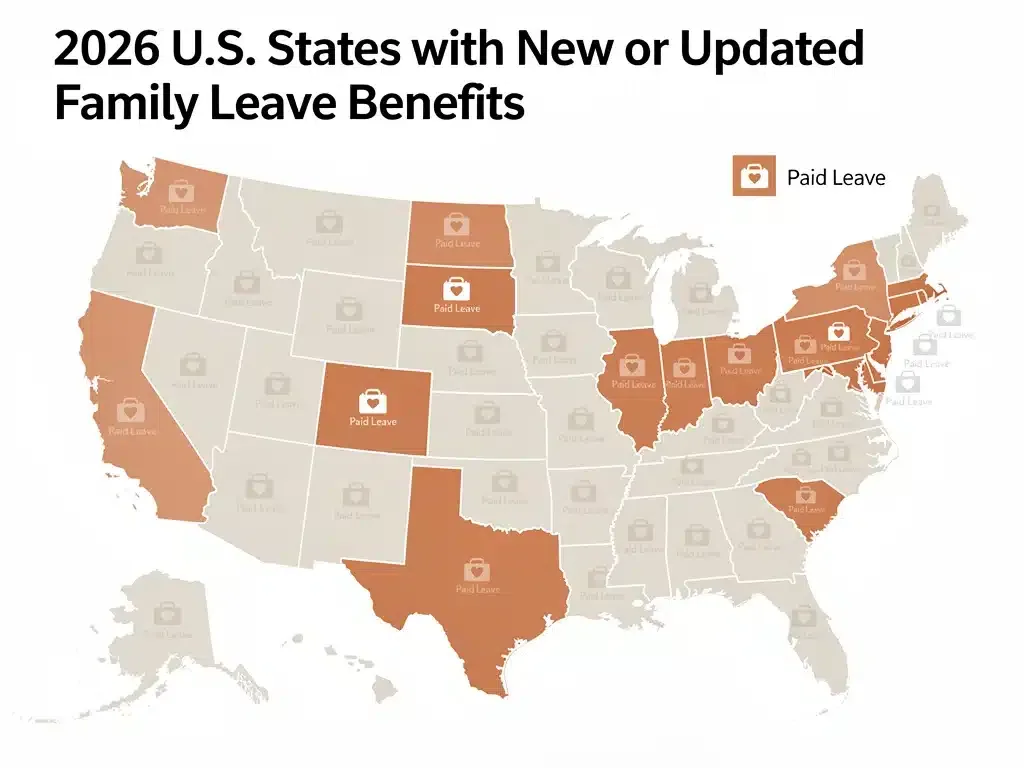
As we look towards 2026, a specific set of 11 states are at the forefront of implementing or significantly enhancing their State-Specific Family Leave Benefits.
These states represent a diverse geographical and economic cross-section of the nation, signaling a broad-based commitment to supporting working families. The details of their programs are vital for residents and businesses alike.
While the exact list is subject to minor legislative adjustments, the states prominently featuring in discussions and legislative calendars for 2026 include those with recently passed laws, those in the final stages of implementation, and those expanding existing pilots.
This proactive approach by these states sets a precedent for others contemplating similar measures in the future. Their programs vary in the types of leave covered and the generosity of benefits.
Understanding which states are involved and the core tenets of their programs is the first step for anyone seeking to utilize or comply with these new regulations.
This section will provide a general overview of the characteristics of these leading states’ initiatives, without delving into every minute detail, which can be found in official state resources.
Deep Dive into Specific State Programs
Each of the 11 states has developed a unique framework for its paid family leave program, reflecting local economic conditions and policy priorities.
For instance, some states might emphasize parental leave, offering extended periods for bonding with a new child, while others might prioritize medical leave for serious health conditions.
These distinctions are crucial for understanding the full scope of available benefits.
Funding mechanisms also differ, with some states relying on employee contributions, others on employer contributions, and a few utilizing a combination of both.
These funding models directly influence the financial sustainability of the programs and the burden placed on different stakeholders.
Understanding the financial structure is key to appreciating the overall design of these State-Specific Family Leave Benefits for 2026.
Eligibility criteria, waiting periods before benefits can be claimed, and the definition of a ‘family member’ are also areas where states exhibit considerable variation.
These finer points often determine who can access the benefits and under what circumstances, making it imperative to consult official state guidelines for precise information relevant to your situation.
California: Long-standing program, continuous adjustments and expansions.
New York: Robust program with broad coverage and significant wage replacement.
Massachusetts: Comprehensive program covering family, medical, and parental leave.
New Jersey: One of the earliest adopters, ongoing enhancements and accessibility improvements.
Rhode Island: Pioneering program, serving as a model for other states.
Washington: Newer program with a focus on both family and medical leave.
Oregon: Recent implementation, offering a wide range of covered reasons for leave.
Colorado: Phased implementation, with full benefits expected by 2026.
Connecticut: Comprehensive benefits for various family and medical needs.
Maryland: New program set to fully launch by 2026, offering significant support.
Delaware: Emerging program with specific focus areas for family leave.
Eligibility Requirements and Benefit Structures
Understanding the eligibility requirements is the first critical step for any individual seeking to utilize State-Specific Family Leave Benefits for 2026.
These criteria typically involve a minimum earning threshold or a specified period of employment within the state.
States aim to ensure that benefits are accessible to a broad segment of the workforce while maintaining the fiscal integrity of the programs.
The benefit structures themselves vary widely, primarily in terms of wage replacement rates and the maximum duration of leave.
Some states offer a higher percentage of an individual’s average weekly wage, especially for lower-income earners, while others provide a flat rate or cap the maximum weekly benefit.
These differences can significantly impact a family’s financial stability during a leave period.
Additionally, states often define specific ‘qualifying reasons’ for leave, which can include bonding with a new child, caring for a family member with a serious health condition, or addressing one’s own serious health condition.
Some programs also extend to military family leave or safe leave for victims of domestic violence. Clarity on these definitions is essential for successful application.
Navigating Application Processes
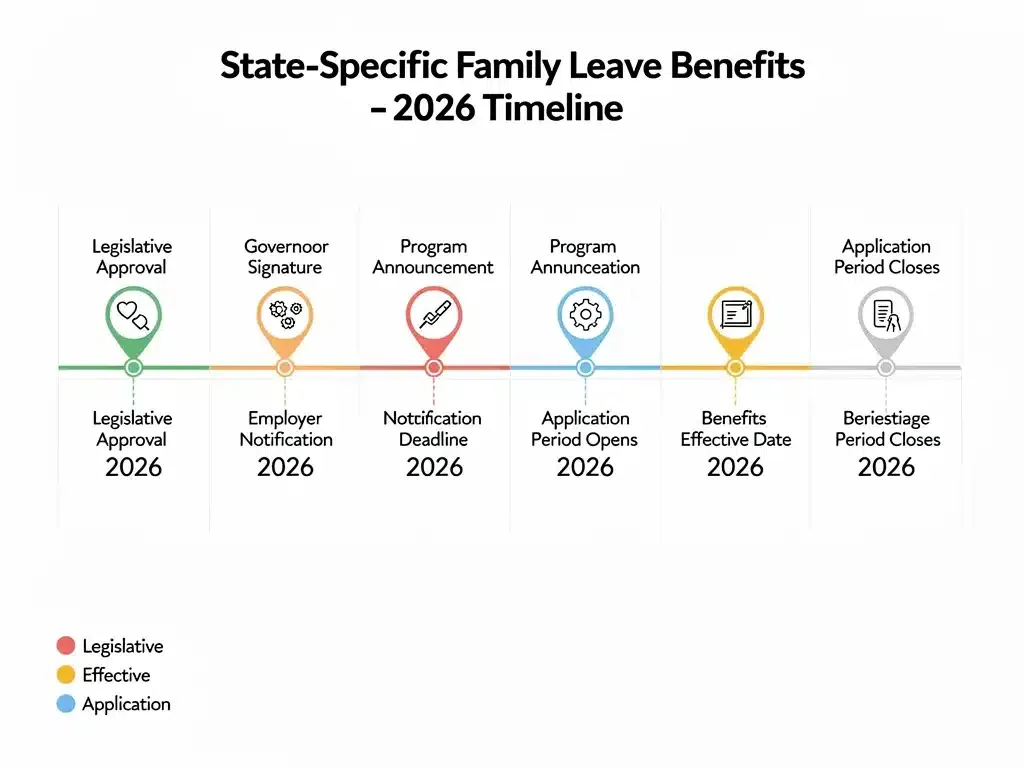
Applying for State-Specific Family Leave Benefits for 2026 typically involves submitting documentation to a state agency, often online.
This process requires applicants to provide proof of identity, employment, and the qualifying reason for leave. Some states may also require medical certification from a healthcare provider to substantiate a serious health condition.
The waiting period before benefits commence is another important consideration. While some states offer immediate benefits, others may have a short waiting period, such as one week, before payments begin.
Understanding this timeframe is crucial for financial planning, especially for those who may not have significant savings to cover initial expenses.
It is highly advisable for potential applicants to review their state’s official website or contact the relevant state agency well in advance of needing leave.
This proactive approach allows individuals to gather necessary documents, understand specific deadlines, and clarify any questions regarding their eligibility or the application process for these vital State Family Leave Benefits.
Impact on Employees and Employers
The expansion of State-Specific Family Leave Benefits for 2026: What 11 States Offer in Paid Time Off carries profound implications for both employees and employers.
For employees, these benefits represent a significant step towards greater work-life balance and financial security during challenging times. The ability to take paid time off without fear of losing income or employment can alleviate immense stress.
This increased security can lead to improved physical and mental health outcomes for workers, fostering a more engaged and productive workforce upon their return.
Employees are better able to care for newborns, tend to sick family members, or recover from their own illnesses, knowing their jobs and financial well-being are protected. These are tangible advantages that enhance overall quality of life.
For employers, the impact is multifaceted. While there may be initial administrative adjustments and, in some cases, contributions to state funds, the long-term benefits often include enhanced employee loyalty, reduced turnover, and a more attractive recruitment package.
Companies that support their employees through robust leave policies often see a positive return on investment through a more stable and dedicated workforce.
Challenges and Opportunities for Businesses
Businesses, particularly small and medium-sized enterprises (SMEs), may face initial challenges in adapting to new State-Specific Family Leave Benefits.
These can include understanding complex regulations, managing temporary staffing needs, and navigating the financial contributions required by state programs.
However, many states offer resources and support to help businesses comply and integrate these policies smoothly.
Despite these challenges, paid family leave presents significant opportunities for businesses.
Companies that embrace these benefits can cultivate a reputation as family-friendly employers, which is a powerful tool for attracting and retaining top talent in a competitive market.
A supportive workplace culture also leads to higher employee morale and reduced absenteeism in the long run.
Furthermore, some states offer tax credits or other incentives to businesses to offset the costs associated with paid leave, further mitigating the financial burden.
Proactive engagement with these programs and leveraging available resources can transform potential challenges into strategic advantages for businesses operating in states with advanced family leave benefits.
Funding Mechanisms and Financial Considerations
The sustainability of State-Specific Family Leave Benefits is contingent upon robust and equitable funding mechanisms.
Typically, these programs are financed through payroll deductions, either solely from employees, solely from employers, or through a shared contribution model. Understanding how these funds are collected is essential for all stakeholders.
These contributions are usually a small percentage of an employee’s wages, up to a certain annual cap. The collected funds are then pooled into a state-managed trust fund, from which benefits are disbursed to eligible individuals.
This insurance-like model ensures that the financial burden of individual leaves is distributed across a wider base, making the program more resilient.
For individuals, the payroll deductions are often minimal but contribute to a significant safety net.
For employers, understanding their contribution responsibilities and how these fit into their overall payroll and benefits budget is critical for financial planning and compliance.
The transparency of these funding models varies by state, but detailed information is generally publicly available.
Economic Implications for State Economies
The introduction or expansion of State-Specific Family Leave Benefits for 2026 has broader economic implications for the states involved.
Studies often indicate that paid family leave can boost local economies by maintaining household income during periods of leave, which in turn supports consumer spending.
This helps mitigate the economic shock that might otherwise occur when individuals take unpaid time off.
Beyond direct economic injections, these programs can also lead to increased labor force participation, particularly among women, who are often primary caregivers.
By making it easier to balance work and family, paid leave helps retain skilled workers in the workforce, reducing brain drain and contributing to a more robust and experienced labor pool. This strengthens the overall economic fabric of the state.
While there are initial administrative costs and adjustments for businesses, the long-term economic benefits, such as reduced employee turnover, improved productivity, and enhanced workforce stability, often outweigh these initial expenditures.
This makes State Family Leave Benefits a strategic investment in human capital and economic resilience for the participating states.
Comparing State-Specific Family Leave Benefits
When examining State-Specific Family Leave Benefits, a comparative analysis reveals significant differences in program design and generosity.
These variations mean that a benefit available in one state may not be identical, or even exist, in another, necessitating careful review by individuals and multi-state employers.
Key areas of comparison include the duration of leave, which can range from a few weeks to several months, and the percentage of wage replacement, which often varies based on an individual’s income.
Some states might offer higher replacement rates for lower-income workers, aiming to provide more equitable support across the economic spectrum.
Furthermore, the definition of ‘family member’ can differ considerably, impacting who an employee can take leave to care for.
Some states have broader definitions that include domestic partners or chosen family, while others adhere to more traditional interpretations.
These distinctions are vital for understanding the full scope of an individual’s entitlements under these State Family Leave Benefits.
Navigating Variations in Policy
For individuals working across state lines or for employers with operations in multiple states, navigating these policy variations can be complex.
Each state’s program has its own set of rules, from eligibility criteria and application procedures to employer responsibilities and penalties for non-compliance. A thorough understanding of each jurisdiction’s specific regulations is paramount.
Employers, in particular, need to ensure their human resources policies and payroll systems are compliant with the requirements of every state in which they operate.
This may involve implementing different leave policies for employees in different locations or utilizing specialized payroll services that can handle the complexities of multi-state benefit administration. This is crucial for avoiding legal issues.
For employees, understanding the specific details of their state’s program is key to maximizing their benefits.
This includes knowing when they become eligible, how to apply, what documentation is required, and what protections are afforded to them during their leave.
Proactive research into their State-Specific Family Leave Benefits for 2026 can save considerable stress and ensure a smooth process.
Future Outlook and Potential Expansions
The current momentum behind State-Specific Family Leave Benefits suggests a positive future outlook for similar policies nationwide.
As more states successfully implement and operate these programs, they provide compelling case studies for jurisdictions still considering such legislation. This trend indicates a potential for broader adoption in the coming years.
Discussions at the federal level also continue regarding a national paid family leave program, though progress remains slow.
The success and proliferation of state-level initiatives could either spur federal action or continue to solidify the state-by-state approach, with states adapting policies to their unique demographics and economic conditions.
This dual dynamic shapes the long-term trajectory of paid leave.
Advocacy groups and labor organizations continue to push for even more comprehensive and inclusive paid leave policies, aiming to expand eligibility, increase wage replacement rates, and broaden the definition of family.
These ongoing efforts will likely influence future legislative sessions and potentially lead to further enhancements of State-Specific Family Leave Benefits beyond 2026.
Anticipated Legislative Developments
Beyond the 11 states actively implementing or expanding programs for 2026, several other states are in various stages of exploring or debating similar legislation.
The success of current programs often serves as a powerful argument for lawmakers in these hesitant states, demonstrating both the feasibility and the positive societal impacts of paid family leave. This creates a ripple effect across the country.
Key areas of future legislative focus may include extending the duration of paid leave, particularly for parental bonding or complex medical conditions.
There is also a growing push to ensure that benefits are more equitable for low-wage workers, potentially through higher wage replacement rates for those earning less.
These considerations aim to make State Family Leave Benefits truly universal in their impact.
Furthermore, policymakers may look to streamline the application process and enhance coordination between state programs and federal benefits, if a national program ever materializes.
These ongoing legislative developments highlight a dynamic and evolving landscape for paid family leave, consistently striving to meet the changing needs of the modern workforce.
Key Aspect | Description for 2026 |
|---|---|
State Expansion | 11 states are launching or significantly expanding paid family leave programs. |
Eligibility | Varies by state; typically requires minimum earnings or employment duration. |
Benefit Scope | Covers new child care, serious family illness, or personal health issues. |
Funding Model | Primarily through payroll contributions from employees, employers, or both. |
Frequently Asked Questions About State Family Leave Benefits
What exactly are State-Specific Family Leave Benefits for 2026?▼
These benefits are state-mandated programs providing paid time off for eligible employees to address specific family and medical needs. For 2026, 11 states are either introducing new programs or significantly expanding existing ones, offering partial wage replacement during approved leave periods, ensuring financial stability for families.
How do I know if I’m eligible for these benefits?▼
Eligibility for State Family Leave Benefits typically depends on factors like your employment history, earnings within the state, and the specific reason for your leave. Each state has unique criteria, so it’s best to consult your state’s official labor department website for precise guidelines and requirements tailored to your situation.
What types of leave are usually covered by these programs?▼
Most State-Specific Family Leave Benefits cover leave for bonding with a new child (birth, adoption, foster care), caring for a family member with a serious health condition, or managing your own serious health condition. Some states also include leave for military family exigencies or safe leave related to domestic violence, broadening support.
How are these State Family Leave Benefits funded?▼
Funding for these benefits primarily comes from payroll contributions, which can be paid by employees, employers, or a combination of both, depending on the state. These contributions create a state-managed trust fund from which benefits are disbursed, ensuring the program’s sustainability and widespread access for eligible workers.
What should employers do to prepare for 2026’s changes?▼
Employers should proactively review their state’s specific laws regarding 2026 State-Specific Family Leave Benefits, update internal policies, and ensure payroll systems are compliant. Consulting with HR and legal professionals can help navigate new contribution requirements, employee notification obligations, and managing temporary staffing during employee leaves.
What this means
The ongoing evolution of State-Specific Family Leave Benefits for 2026: What 11 States Offer in Paid Time Off signifies a crucial shift in how American society supports its workforce.
These developments underscore a growing recognition of the importance of balancing professional life with personal and family responsibilities, ensuring greater financial stability during life’s critical moments.
To see an example of a long-standing state model, view the rules and guidelines for California’s Paid Family Leave program through the EDD.
As these programs continue to mature and potentially expand, they will undoubtedly reshape the employment landscape for both workers and businesses, fostering more resilient communities and dynamic economies across the nation.
Monitoring these changes remains paramount for informed decision-making.