Financial Literacy for College Students: A 4-Week Curriculum 2026
Advertisements
Latest developments on Financial Literacy for College Students: A 4-Week Educational Curriculum for 2026, with key facts, verified sources and what readers need to monitor next in Estados Unidos, presented clearly in Inglês (Estados Unidos) (en-US).
The eagerly anticipated Financial Literacy for College Students: A 4-Week Educational Curriculum for 2026 is rapidly approaching its implementation phase, poised to equip a new generation with essential monetary management skills. This initiative responds directly to the growing need for comprehensive financial education among young adults navigating complex economic landscapes. As college costs rise and student debt remains a significant concern, understanding personal finance is no longer a luxury but a necessity for academic success and future stability.
Officials and educational institutions across the United States are collaborating to finalize the curriculum’s structure and content, ensuring it addresses the most pertinent financial challenges faced by today’s students. This structured program aims to provide practical, actionable knowledge over a concentrated period, making it accessible and impactful. The focus on a 4-week model is designed for maximum engagement and retention, allowing students to integrate financial wisdom seamlessly into their demanding academic schedules.
This article will delve into the specifics of this groundbreaking curriculum, examining its modules, objectives, and the expected benefits for college students. We will explore how this program plans to tackle critical areas such as budgeting, debt management, credit scores, and investment basics, preparing students for sound financial decisions long after graduation. The rollout of this comprehensive Financial Literacy Curriculum marks a pivotal moment in higher education, promising to foster greater economic resilience among the nation’s youth.
Understanding the 2026 Financial Literacy Curriculum for College Students
The Financial Literacy for College Students: A 4-Week Educational Curriculum for 2026 represents a strategic effort to embed crucial financial knowledge directly into the college experience. This program acknowledges that many students arrive at university with limited exposure to personal finance, making them vulnerable to common pitfalls like excessive debt and poor spending habits.
Designed with input from financial experts, educators, and student advocates, the curriculum aims to be both comprehensive and engaging. It moves beyond theoretical concepts, focusing on real-world applications that students can immediately integrate into their daily lives. The goal is to cultivate a proactive approach to financial well-being, rather than a reactive one.
This structured 4-week format is particularly innovative, allowing for focused learning without overwhelming students. It provides a concentrated burst of information and practical tools, ensuring that key financial principles are thoroughly absorbed and can be applied effectively. The curriculum is a critical step towards empowering college students with lasting financial independence.
The development of the Financial Literacy Curriculum involved extensive research into the specific financial challenges faced by college students today. This includes understanding the nuances of student loan debt, the impact of credit card usage, and the importance of early financial planning.

Experts emphasized the need for a curriculum that is not only informative but also accessible and relatable. This means incorporating interactive elements, case studies, and opportunities for students to apply concepts to their own financial situations. The program seeks to demystify complex financial topics, making them understandable for a diverse student body.
Furthermore, the Financial Literacy for College Students: A 4-Week Educational Curriculum for 2026 is designed to be adaptable, allowing institutions to tailor certain aspects to their unique student demographics and resources. This flexibility ensures broader adoption and greater impact across various college environments. The curriculum’s foundational principles, however, remain consistent, providing a standardized baseline for financial education.
Key Modules and Learning Objectives of the Financial Literacy Curriculum
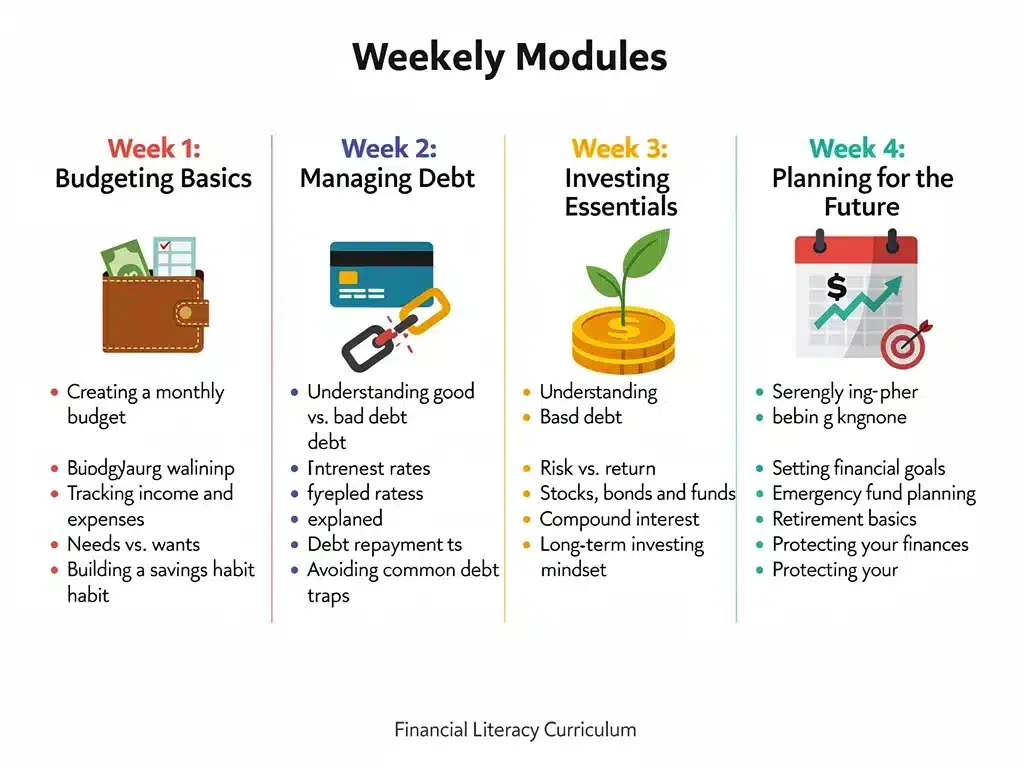
The Financial Literacy for College Students: A 4-Week Educational Curriculum for 2026 is meticulously structured into four distinct weekly modules, each building upon the previous one to provide a holistic understanding of personal finance. These modules cover a range of topics deemed essential for college students to navigate their financial present and future successfully.
The initial week focuses on foundational elements, establishing a strong base for subsequent learning. This includes understanding income, expenses, and the critical skill of creating and sticking to a budget. Students will learn how to track their spending and identify areas for potential savings, setting the stage for more advanced financial concepts.
Subsequent weeks delve into more complex but equally vital areas, ensuring that by the end of the program, students possess a comprehensive toolkit for financial management. The progressive nature of the curriculum is designed to prevent information overload while maximizing knowledge retention and practical application. This systematic approach is a cornerstone of the Financial Literacy Curriculum.
Week 1: Budgeting and Cash Flow Management
- Understanding personal income and expenses.
- Creating a realistic budget plan.
- Tracking spending and identifying savings opportunities.
Week 2: Debt Management and Credit Building
- Navigating student loans and repayment strategies.
- Understanding credit scores and reports.
- Building positive credit history responsibly.
These early modules are crucial for students to establish healthy financial habits from the outset. The emphasis on practical exercises ensures that students can immediately apply what they learn to their own financial situations, fostering a sense of empowerment and control over their money.
Empowering Students Through Practical Financial Skills
A core objective of the Financial Literacy for College Students: A 4-Week Educational Curriculum for 2026 is to move beyond theoretical knowledge and equip students with genuinely practical financial skills. This program is not just about understanding concepts; it’s about applying them in real-world scenarios.
The curriculum incorporates interactive workshops, case studies, and simulations that mimic common financial decisions students will face. This hands-on approach helps demystify complex topics like investing or managing debt, making them less intimidating and more accessible. The goal is to build confidence alongside competence.
By fostering practical skills, the curriculum aims to reduce financial stress, which can often impact academic performance and overall well-being. Empowering students with these tools ensures they are better prepared for life after graduation, whether entering the workforce or pursuing further education. This practical focus is a key differentiator of this Financial Literacy Curriculum.
Week 3: Saving, Investing, and Future Planning
- Setting financial goals and developing savings strategies.
- Introduction to basic investment concepts (stocks, bonds, mutual funds).
- Planning for long-term financial security.
Week 4: Consumer Protection and Financial Scams
- Understanding consumer rights and responsibilities.
- Identifying and avoiding common financial scams.
- Protecting personal information and identity.
The final modules address critical aspects of financial security and future planning. By the end of the Financial Literacy for College Students: A 4-Week Educational Curriculum for 2026, students will have a foundational understanding of how to protect their assets, grow their wealth, and plan for various life stages, from retirement to homeownership.
Anticipated Impact and Benefits for College Students
The implementation of the Financial Literacy for College Students: A 4-Week Educational Curriculum for 2026 is expected to yield significant positive impacts on college students’ financial health and overall well-being. By providing a structured and accessible program, institutions aim to mitigate some of the most pressing financial challenges faced by young adults today.
One of the primary benefits will be a noticeable reduction in financial stress among students, allowing them to focus more effectively on their academic pursuits. Equipped with budgeting and debt management skills, students are better positioned to avoid accumulating excessive debt and make informed decisions about their spending and borrowing. This proactive approach fosters greater peace of mind.
Furthermore, the curriculum is anticipated to improve graduation rates by reducing the number of students who drop out due to financial difficulties. When students feel more secure about their financial future, they are more likely to complete their degrees and transition successfully into post-college life. This holistic benefit underscores the importance of the Financial Literacy Curriculum.
Beyond individual student benefits, the widespread adoption of the Financial Literacy for College Students: A 4-Week Educational Curriculum for 2026 could have broader societal implications. A generation of financially literate graduates is more likely to contribute positively to the economy, make sound investment decisions, and be less reliant on social safety nets.
This curriculum also aims to foster a culture of financial responsibility and awareness within university communities. As more students engage with these topics, peer-to-peer learning and support networks can naturally emerge, creating a more financially savvy student body. The long-term effects are expected to extend far beyond the college years, impacting future generations.
The program’s success will be measured by various metrics, including student feedback, changes in financial behavior, and ultimately, a reduction in student loan defaults and an increase in personal savings rates. These outcomes will solidify the value and necessity of comprehensive financial education for all college students. The Financial Literacy Curriculum is a long-term investment in human capital.
Implementation Strategies and Institutional Adoption
The successful rollout of the Financial Literacy for College Students: A 4-Week Educational Curriculum for 2026 hinges on effective implementation strategies and broad institutional adoption across diverse educational settings. Universities and colleges are currently evaluating how best to integrate this curriculum into their existing academic and extracurricular frameworks.
Many institutions are considering offering the curriculum as a standalone elective course, a series of workshops, or even embedding key concepts within existing first-year experience programs. The flexibility in delivery methods is crucial for ensuring that the program can reach a maximum number of students without overburdening academic departments. Partnerships with financial institutions and non-profit organizations are also being explored to provide additional resources and expert instruction.
Training for faculty and staff who will deliver the curriculum is a critical component of the implementation plan. This ensures consistency in teaching quality and content delivery, regardless of the institution. The goal is to make the Financial Literacy Curriculum a standard offering, accessible to every college student in the United States.
Pilot Programs and Early Feedback
- Initial pilot programs launched in select universities.
- Feedback collected from participating students and educators.
- Adjustments made based on real-world implementation experiences.
Resource Allocation and Support Systems
- Securing funding for curriculum development and delivery.
- Establishing dedicated financial counseling services.
- Providing online tools and resources for ongoing support.
Early pilot programs are providing invaluable insights into the curriculum’s effectiveness and areas for refinement. This iterative process ensures that the final version of the Financial Literacy for College Students: A 4-Week Educational Curriculum for 2026 is robust, relevant, and highly impactful. The collaborative effort between various stakeholders is paramount to its long-term success.
Addressing Challenges and Ensuring Accessibility
While the prospects for the Financial Literacy for College Students: A 4-Week Educational Curriculum for 2026 are promising, its broad implementation will undoubtedly face challenges that require careful consideration. Ensuring equitable access for all students, regardless of their background or academic path, is a paramount concern.
One significant challenge involves overcoming potential student apathy or the perception that financial education is secondary to their primary academic pursuits. Strategies to make the curriculum engaging and highlight its immediate relevance to student life will be essential. Marketing and outreach efforts will play a crucial role in demonstrating the tangible benefits of financial literacy.
Furthermore, institutions must address resource constraints, including funding for dedicated instructors, materials, and ongoing support services. Collaborative models and leveraging technology can help mitigate some of these challenges, making the Financial Literacy Curriculum a sustainable and widely available program. The commitment to accessibility is central to its mission.

Another hurdle involves tailoring the curriculum to meet the diverse needs of a student population that includes traditional undergraduates, non-traditional students, and those from varying socioeconomic backgrounds. A one-size-fits-all approach may not be sufficient, necessitating adaptable modules and supplementary resources.
Educators are exploring options for personalized learning pathways and modular content that students can access based on their existing knowledge and specific financial goals. This individualized approach ensures that the Financial Literacy for College Students: A 4-Week Educational Curriculum for 2026 remains relevant and effective for a broad spectrum of learners.
Ultimately, ongoing evaluation and a willingness to adapt the curriculum based on student outcomes and evolving financial landscapes will be key to its enduring success. This iterative process of refinement will ensure that the financial literacy program remains a vital resource for college students for years to come.
The Broader Landscape of Financial Education
The introduction of the Financial Literacy for College Students: A 4-Week Educational Curriculum for 2026 does not occur in a vacuum but is part of a larger, evolving landscape of financial education. There is a growing recognition at both national and state levels of the critical importance of equipping individuals with strong financial skills from an early age.
This college-level curriculum builds upon initiatives in K-12 education, where many states are increasingly mandating personal finance instruction. The aim is to create a seamless educational pathway, ensuring that students receive continuous and progressively more sophisticated financial guidance throughout their academic careers. This integrated approach strengthens the overall impact of financial literacy efforts.
The curriculum’s focus on practical application and real-world scenarios aligns with broader trends in educational reform, which emphasize skills-based learning over rote memorization. This shift is crucial for preparing students not just for exams, but for the complexities of adult life. The Financial Literacy Curriculum is a significant piece of this larger puzzle.
Looking ahead, the success of this college curriculum could serve as a model for other educational sectors and even for adult financial literacy programs. The structured 4-week format offers a replicable and effective framework for delivering critical financial knowledge in a concentrated manner. This could lead to a more financially resilient population overall.
The collaborative efforts between government agencies, educational institutions, and the private sector highlight a shared commitment to improving financial well-being. This collective momentum indicates a future where financial literacy is a fundamental component of education, empowering individuals to make informed decisions throughout their lives. The Financial Literacy for College Students: A 4-Week Educational Curriculum for 2026 is a testament to this commitment.
| Key Point | Brief Description |
|---|---|
| Curriculum Focus | Practical financial skills for college students over 4 weeks. |
| Core Modules | Budgeting, debt, credit, saving, investing, consumer protection. |
| Anticipated Benefits | Reduced financial stress, improved financial decisions, higher graduation rates. |
| Implementation | Flexible integration into college programs, pilot testing, resource allocation. |
Frequently Asked Questions About the 2026 Financial Literacy Curriculum
What is the primary goal of the Financial Literacy for College Students: A 4-Week Educational Curriculum for 2026?▼The primary goal is to equip college students with essential practical financial skills, enabling them to make informed decisions regarding budgeting, debt management, and future financial planning. It aims to reduce financial stress and foster long-term economic well-being.
Who developed this new Financial Literacy Curriculum?▼The curriculum was developed through collaborative efforts involving financial experts, educational institutions, and student advocacy groups. This ensures a comprehensive and relevant program tailored to the specific financial needs and challenges of college students today.
How will colleges integrate the Financial Literacy for College Students: A 4-Week Educational Curriculum for 2026?▼Colleges have flexibility in integration, offering it as an elective course, a series of workshops, or embedded within existing first-year programs. Pilot programs are currently underway to fine-tune the most effective delivery methods for diverse student populations.
What topics are covered in the 4-week program?▼The curriculum covers budgeting, cash flow management, debt and credit building, saving, basic investing, and consumer protection against financial scams. Each week builds upon previous knowledge, offering a comprehensive financial education.
What are the expected long-term benefits of this Financial Literacy Curriculum?▼Long-term benefits include reduced student loan defaults, increased personal savings rates, and a more financially literate generation of graduates. This contributes to greater economic stability for individuals and society, fostering a culture of responsible financial management.
Looking Ahead: The Future of Financial Education
The launch of the Financial Literacy for College Students: A 4-Week Educational Curriculum for 2026 represents a significant step forward in addressing a critical gap in higher education. This structured approach to financial education is poised to empower countless students with the knowledge and skills necessary for sound financial decision-making. The commitment from educational institutions and policy makers underscores a growing understanding of financial literacy as a foundational life skill.
As the curriculum rolls out, its impact will be closely monitored, with ongoing adjustments expected to ensure its continued relevance and effectiveness. The success of this initiative could set a new standard for financial education, influencing future programs across various age groups and educational levels. It signals a promising future where financial acumen is a universal outcome of the educational journey.