Top 5 European Business Schools: English Economics Master's 2026
Advertisements
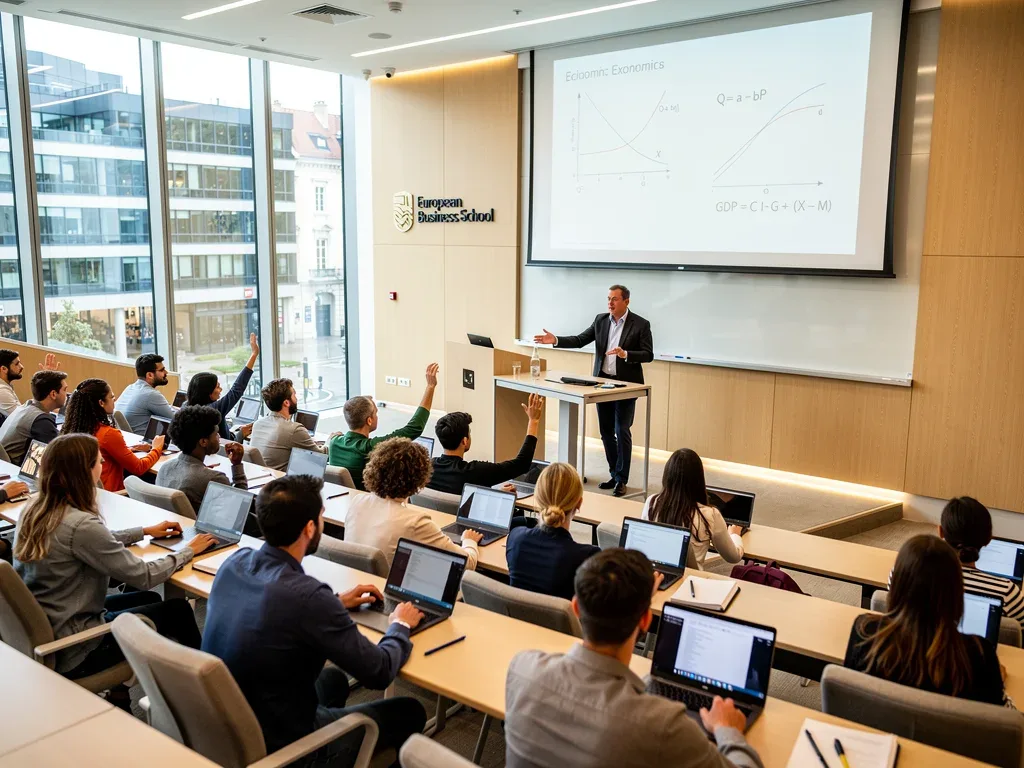
Prospective students seeking advanced economics education in Europe can explore leading institutions. This guide highlights the Top 5 European Business Schools Offering 100% English-Taught Economics Master's Degrees in 2026, detailing their unique offerings and what to expect. Understanding these programs is crucial for informed academic and career planning.
The landscape of graduate education continues to evolve, with increasing demand for specialized programs taught in English. For those aspiring to excel in economic analysis and policy, the Top 5 European Business Schools Offering 100% English-Taught Economics Master's Degrees in 2026 represent prime opportunities. This comprehensive overview provides crucial insights for future applicants, focusing on program specifics, admission criteria, and career prospects.
As 2026 approaches, universities across Europe are refining their curricula to meet global economic challenges. Identifying the institutions that offer fully English-taught economics master's degrees is paramount for international students. This article aims to clarify which schools stand out, offering a detailed look at their programs and what makes them exceptional in the field of economics.
Navigating European English Economics Masters Programs
Choosing the right master's program can significantly impact a student's career trajectory. European English Economics Masters programs are highly sought after due to their rigorous academic standards and diverse international environments. These degrees often provide a unique blend of theoretical knowledge and practical application, preparing graduates for a wide range of roles in finance, research, government, and international organizations.
Understanding the nuances of each program, including curriculum structure, faculty expertise, and research opportunities, is essential. Many of these institutions boast world-renowned economists and cutting-edge research centers, offering students unparalleled access to leading-edge economic thought. The competitive nature of admissions also necessitates thorough preparation and strategic application.
The focus on 100% English-taught programs removes language barriers, making these institutions particularly attractive to students from the United States and other non-European countries. This accessibility fosters a truly global classroom experience, enriching discussions and broadening perspectives on complex economic issues.
Key Considerations for 2026 Applicants
Applicants for European English Economics Masters in 2026 should begin their research early, as deadlines often vary. Factors such as program length, specialization options, and internship opportunities play a significant role in decision-making. Prospective students should also consider the reputation of the faculty and the school's ties to industry and policy-making bodies.
- Research specific program curricula and course offerings.
- Verify admission requirements, including GRE/GMAT scores and language proficiency.
- Explore scholarship and financial aid opportunities available.
- Consider career services and alumni networks for post-graduation support.
Each of the Top 5 European Business Schools Offering 100% English-Taught Economics Master's Degrees in 2026 has distinct strengths. Some may emphasize quantitative methods, while others focus on policy analysis or behavioral economics. Aligning personal academic interests with program specializations is crucial for a successful application and a rewarding academic experience.
London School of Economics and Political Science (LSE)
LSE consistently ranks among the top institutions globally for economics, offering a diverse array of master's programs in the field. Its location in London provides unparalleled access to financial markets, international organizations, and policy think tanks. The department's faculty includes Nobel laureates and leading researchers, ensuring a world-class education.
The MSc Economics program at LSE is highly rigorous, designed for students with strong quantitative backgrounds. It provides a deep understanding of economic theory and empirical methods, preparing graduates for careers in academia, central banks, and international institutions. The curriculum is constantly updated to reflect current economic challenges and research frontiers.
LSE's emphasis on research-led teaching ensures students are exposed to cutting-edge economic analysis. The vibrant intellectual community, coupled with numerous seminars and workshops, offers ample opportunities for academic engagement and networking. This makes it a premier choice for European English Economics Masters.
Program Highlights and Specializations
LSE offers several specialized master's degrees in economics, catering to various interests. These include MSc Econometrics and Mathematical Economics, MSc Finance and Economics, and MSc Economics and Management. Each program is meticulously designed to provide in-depth knowledge and advanced analytical skills relevant to its specific domain.
- MSc Economics: Core microeconomics, macroeconomics, and econometrics.
- MSc Econometrics and Mathematical Economics: Focus on advanced quantitative techniques.
- MSc Finance and Economics: Blends economic theory with financial market analysis.
- MSc Economics and Management: Integrates economic principles with business strategy.
Admissions to LSE's economics master's programs are highly competitive, requiring excellent academic records, strong GRE scores, and compelling personal statements. The institution seeks candidates who demonstrate intellectual curiosity, analytical prowess, and a genuine passion for economics, making it a standout among the Top 5 European Business Schools Offering 100% English-Taught Economics Master's Degrees in 2026.
Bocconi University (Milan, Italy)
Bocconi University, located in the heart of Milan, Italy, has established itself as a leading European institution for economics and business. Its Department of Economics is renowned for its strong research output and its commitment to providing a top-tier education. Bocconi offers several fully English-taught master's programs that attract a highly international student body.
The MSc in Economics and Social Sciences (ESS) at Bocconi is particularly popular, offering a comprehensive and analytical approach to economic issues. The program is designed to equip students with the tools necessary to understand and address complex economic and social phenomena. Its interdisciplinary nature provides a unique perspective on global challenges.
Bocconi's strong ties to the European and international job markets provide excellent career opportunities for its graduates. The university’s career service is highly effective in connecting students with leading employers in various sectors. This commitment to student success solidifies Bocconi's position as a key player in European English Economics Masters.
Distinctive Features of Bocconi's Programs
Bocconi's economics master's programs are characterized by their rigorous quantitative training and their focus on applied economics. The faculty comprises distinguished scholars who are actively involved in research and policy-making, bringing real-world insights into the classroom. The university's vibrant campus life and extensive network of alumni further enhance the student experience.
- MSc in Economics and Social Sciences: Strong theoretical and empirical foundations.
- MSc in Economic and Financial Sciences: Focus on financial markets and institutions.
- MSc in Economics and Management of Government and International Organizations: Policy-oriented.
The university fosters a dynamic learning environment, encouraging critical thinking and independent research. For students seeking a European English Economics Masters with a strong quantitative foundation and excellent career prospects, Bocconi University stands out. It is undeniably one of the Top 5 European Business Schools Offering 100% English-Taught Economics Master's Degrees in 2026.
Erasmus University Rotterdam (Erasmus School of Economics)
The Erasmus School of Economics (ESE) at Erasmus University Rotterdam is globally recognized for its excellence in economics research and education. With a strong emphasis on quantitative methods and empirical analysis, ESE provides a robust foundation for students pursuing careers in economics. Its programs are designed to be challenging and highly rewarding.
ESE offers a wide range of English-taught master's programs in economics, including specialized tracks in Econometrics, Financial Economics, and Health Economics. The school's faculty are actively engaged in cutting-edge research, contributing significantly to academic literature and policy debates. This research-intensive environment benefits students by exposing them to contemporary economic issues.
Rotterdam, as a major European port city, offers a dynamic and international environment. ESE maintains strong connections with businesses, government agencies, and research institutes, providing students with valuable internship and career opportunities. This integration of academic rigor with practical exposure makes ESE a top choice for European English Economics Masters.
Specialized Tracks and Research Opportunities
ESE’s master's programs are renowned for their depth and specialization, allowing students to tailor their studies to their specific interests. The MSc in Economics program offers various specializations, such as Behavioral Economics, Development Economics, and International Economics, ensuring a comprehensive education in diverse areas.
- MSc Economics: Specializations in various sub-fields of economics.
- MSc Econometrics: Advanced quantitative methods for economic analysis.
- MSc Financial Economics: Focus on financial markets and corporate finance.
The school’s strong research centers, such as the Tinbergen Institute, provide ample opportunities for students to engage in research projects and work alongside leading academics. This hands-on experience is invaluable for those considering doctoral studies or research-oriented careers, reinforcing ESE's status among the Top 5 European Business Schools Offering 100% English-Taught Economics Master's Degrees in 2026. 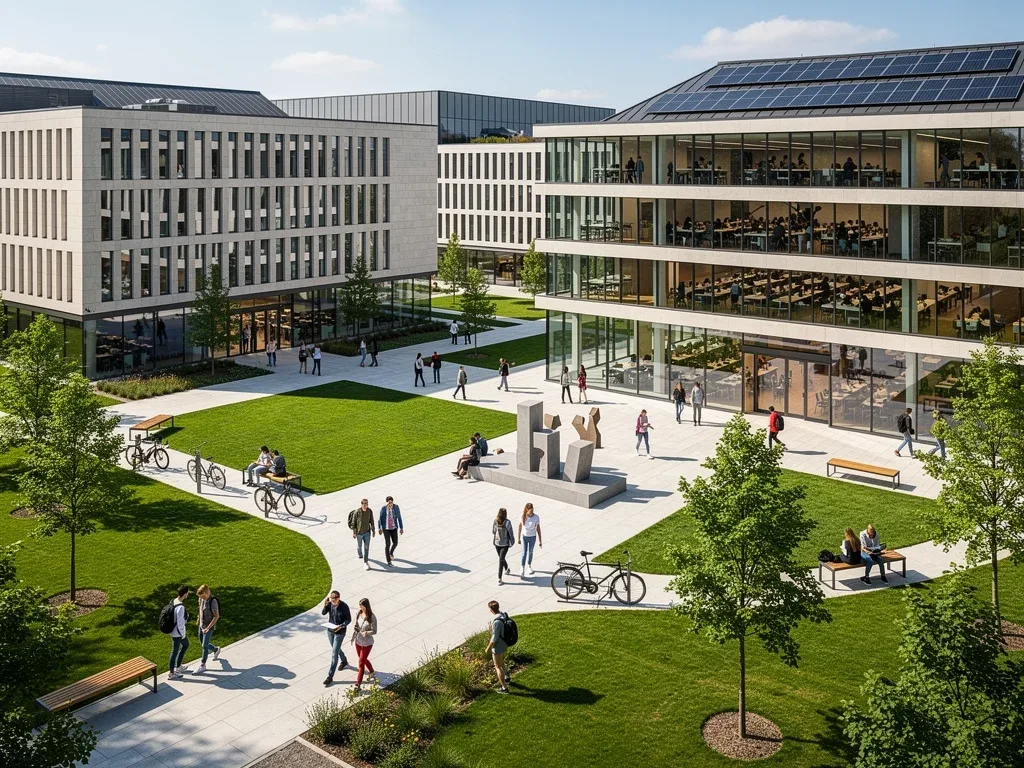
University of Amsterdam (UvA) - Faculty of Economics and Business
The University of Amsterdam's Faculty of Economics and Business (UvA EB) offers a highly regarded MSc in Economics that is entirely taught in English. UvA EB is celebrated for its diverse and international student body, fostering a global perspective on economic issues. The faculty’s research is impactful, contributing to both academic theory and practical policy.
The MSc Economics program at UvA provides a strong foundation in microeconomics, macroeconomics, and econometrics, combined with opportunities for specialization. Students can choose from tracks such as Public Policy, International Economics, and Behavioral Economics, allowing for tailored academic paths. The program emphasizes analytical thinking and problem-solving skills.
Amsterdam offers a vibrant cultural and economic environment, providing students with numerous opportunities for internships and networking. UvA EB has strong connections with various industries and government bodies, facilitating excellent career prospects for its graduates. This makes it an attractive option for European English Economics Masters.
Curriculum Structure and Career Paths
UvA EB’s MSc in Economics is structured to provide both breadth and depth in economic theory and application. The curriculum integrates rigorous coursework with empirical research, preparing students for a wide array of professional roles. The faculty is known for its supportive learning environment and accessible professors.
- MSc Economics: Comprehensive core courses and diverse specialization tracks.
- Research Master in Economics: Designed for students pursuing PhDs.
Graduates from UvA EB's economics programs are highly sought after by employers in consulting, finance, government, and international organizations. The strong emphasis on analytical and quantitative skills ensures that students are well-prepared for the demands of the modern job market. UvA is a strong contender among the Top 5 European Business Schools Offering 100% English-Taught Economics Master's Degrees in 2026.
Tilburg University - School of Economics and Management (TiSEM)
Tilburg University's School of Economics and Management (TiSEM) is a prominent institution in Europe, particularly known for its strong research profile in economics. TiSEM offers several English-taught master's programs in economics that are highly regarded for their academic rigor and quantitative focus. The school's commitment to research excellence is reflected in its faculty's extensive publications and contributions to economic theory.
The MSc in Economics at Tilburg University provides a comprehensive and challenging curriculum, covering advanced microeconomics, macroeconomics, and econometrics. Students are encouraged to engage in independent research and are supported by a strong academic community. The program is designed to develop critical thinking and advanced analytical skills essential for economists.
Tilburg University's location in the Netherlands offers a welcoming and international environment. The university maintains strong links with the Dutch and international labor markets, providing graduates with excellent career opportunities. This blend of academic excellence and career focus makes TiSEM a compelling choice for European English Economics Masters.
Research Focus and International Outlook
TiSEM's economics programs are characterized by their strong research orientation, with students often participating in ongoing research projects. The school hosts several research centers and institutes, offering a dynamic intellectual environment. This emphasis on research provides students with invaluable experience and a deeper understanding of economic phenomena.
- MSc Economics: Focus on advanced theoretical and empirical methods.
- MSc Econometrics and Mathematical Economics: Highly quantitative and research-intensive.
The international composition of both students and faculty at TiSEM enriches the learning experience, fostering a global perspective on economic issues. Graduates are well-prepared for careers in academia, research, and high-level analytical positions in both the public and private sectors. Tilburg University firmly establishes itself as one of the Top 5 European Business Schools Offering 100% English-Taught Economics Master's Degrees in 2026. 
| School | Key Program Focus |
|---|---|
| LSE | Rigorous theory, quantitative methods, diverse specializations. |
| Bocconi | Strong quantitative, applied economics, international focus. |
| Erasmus ESE | Quantitative methods, empirical analysis, specialized tracks. |
| UvA EB | Diverse specializations, global perspective, strong industry links. |
Frequently Asked Questions About European English Economics Masters
What are the typical admission requirements for these programs?▼Admission typically requires a strong undergraduate degree in economics or a related quantitative field, high GRE/GMAT scores, and proof of English proficiency (TOEFL/IELTS). Some schools also look for relevant work experience or research exposure, emphasizing a solid academic background.
Are there scholarship opportunities for international students?▼Yes, many of these Top 5 European Business Schools Offering 100% English-Taught Economics Master's Degrees in 2026 offer various scholarships for international students based on merit or need. It is advisable to check each university's financial aid section and external scholarship databases early in the application process for 2026.
What career paths do graduates typically pursue?▼Graduates often pursue careers in finance, consulting, central banking, international organizations, and government. Many also continue to PhD programs to pursue academic or research careers. The strong analytical skills gained are highly valued across various sectors.
How important is quantitative background for these programs?▼A strong quantitative background is crucial, as most European English Economics Masters programs are highly analytical and rely on advanced mathematics, statistics, and econometrics. Prospective students should ensure their undergraduate coursework adequately prepares them for this rigorous approach.
What is the average duration of these master's programs?▼Most of these English-taught Economics Master's degrees in Europe are full-time programs lasting one to two years. The exact duration can depend on the specific program structure and whether it includes a thesis or internship component. Applicants should verify program length.
Looking Ahead: The Future of Economics Education in Europe
The prominence of the Top 5 European Business Schools Offering 100% English-Taught Economics Master's Degrees in 2026 underscores Europe's role as a global hub for advanced economic studies. As the world becomes increasingly interconnected, the demand for economists with a global perspective and strong analytical skills will only grow. These institutions are at the forefront of preparing the next generation of economic leaders and thinkers.
Prospective students should meticulously research each program, considering not only academic rigor but also cultural fit and career alignment. The investment in a European English Economics Masters degree from one of these top schools promises significant returns, opening doors to diverse and impactful career opportunities across the globe. The evolving economic landscape requires graduates who are adaptable and well-equipped to tackle complex challenges.