Building a Diversified Investment Portfolio in 2026: 20% Growth Stocks
Advertisements
In 2026, building a diversified investment portfolio that allocates 20% to growth stocks has emerged as a key strategy for blending stability with high-growth potential.
Backed by recent analysis from financial experts, this specific asset allocation reflects evolving market conditions and future economic projections.
This article provides a straightforward, factual breakdown of the rationale behind this 20% framework, exploring why it matters for long-term financial health and what indicators investors across the United States should watch next.
Understanding the Core Principles of a Diversified Investment Portfolio
A diversified investment portfolio is fundamental to long-term financial success, aiming to mitigate risk while optimizing returns. The principle involves spreading investments across various asset classes, industries, and geographies.
This strategy ensures that underperforming segments do not disproportionately impact the entire portfolio, providing a buffer against market volatility.
For 2026, the emphasis remains on a balanced approach, with specific attention to high-potential sectors.
The goal is not merely to invest in different things, but to invest in assets that react differently to various economic conditions. This thoughtful allocation is critical for any investor aiming to build a truly robust financial foundation.
Why Diversification Remains Key in 2026
Market dynamics are constantly shifting, and 2026 is anticipated to bring its own set of challenges and opportunities.
Diversification acts as a protective shield, minimizing the impact of unforeseen economic downturns or sector-specific headwinds.
By spreading capital across various asset classes, investors reduce their exposure to the idiosyncratic risks of any single investment.
This balanced approach is essential for maintaining portfolio stability and achieving consistent returns over time.
A well-diversified portfolio helps capture gains from different market cycles, ensuring that investors are not overly reliant on the performance of one particular area.
This resilience is a cornerstone of successful long-term investing.
The Strategic Role of Growth Stocks in 2026
Growth stocks represent companies expected to grow their earnings and revenues at a faster rate than the overall market.
These companies typically reinvest their profits to fuel expansion, often operating in innovative and rapidly evolving industries.
Allocating 20% to growth stocks within a diversified investment portfolio in 2026 can offer significant upside potential.
While they carry higher risk due to their valuation often being based on future earnings, their ability to generate substantial returns makes them an attractive component for long-term growth.
Identifying promising growth stocks requires thorough research into market trends, technological advancements, and company-specific fundamentals. This strategic allocation is designed to supercharge portfolio performance.
Identifying High-Potential Growth Sectors for 2026
Several sectors are poised for significant growth in 2026, driven by innovation and evolving consumer demands. Technology, renewable energy, biotechnology, and artificial intelligence are among the leading contenders.
These sectors are characterized by rapid innovation, expanding markets, and the potential for disruptive advancements.
Investors should look for companies within these areas that demonstrate strong competitive advantages, robust management, and scalable business models.
Focusing on these high-potential sectors can help investors pinpoint growth stocks that are likely to outperform in the coming years. Careful selection within these sectors is crucial to maximizing the 20% allocation.
- Technology: Cloud computing, cybersecurity, AI, and software-as-a-service (SaaS) continue to drive innovation.
- Renewable Energy: Solar, wind, and battery storage solutions are experiencing exponential demand.
- Biotechnology: Advances in gene editing, personalized medicine, and drug discovery offer immense potential.
- Electric Vehicles (EVs): The transition to sustainable transportation is creating a boom in EV manufacturing and related infrastructure.
Balancing Risk and Reward with a 20% Growth Stock Allocation
The 20% allocation to growth stocks is a deliberate choice, designed to strike a balance between aggressive growth and overall portfolio stability. While growth stocks offer higher return potential, they also come with increased volatility.
This specific percentage allows investors to participate in the upside of high-growth companies without exposing their entire portfolio to excessive risk.
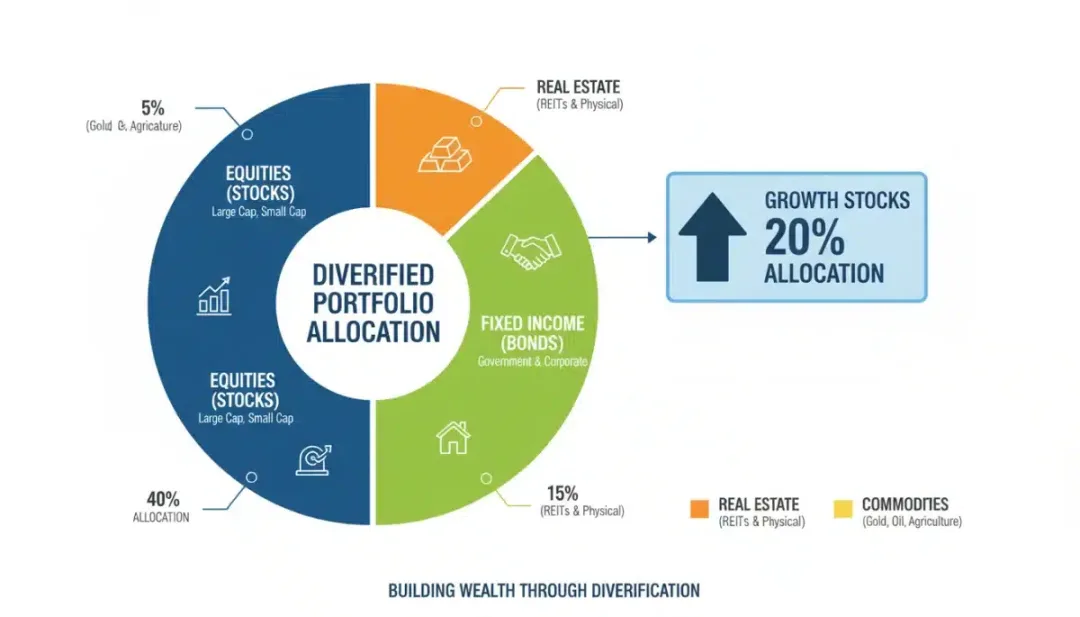
The remaining 80% of the portfolio would typically be allocated to more stable assets, such as value stocks, bonds, and real estate, providing a cushion.
Understanding the interplay between these asset classes is essential for effective risk management. A diversified investment portfolio that includes a strategic portion of growth stocks is built for long-term resilience.
Mitigating Volatility in Growth Stock Investments
Investing in growth stocks inherently involves higher volatility, but investors can employ several strategies to mitigate these risks.
Diversifying within the growth stock segment itself, by investing in multiple growth companies across different sub-sectors, is one effective approach.
Another strategy involves dollar-cost averaging, where a fixed amount of money is invested regularly, regardless of market fluctuations. This reduces the risk of investing a large sum at an unfortunate market peak.
Furthermore, maintaining a long-term perspective is crucial, as growth stocks often experience short-term price swings that can be smoothed out over several years. Patience is a virtue when investing in this dynamic asset class.
Constructing the Remaining 80% of Your Diversified Investment Portfolio
While growth stocks drive potential returns, the majority of the portfolio should focus on stability and income generation. The remaining 80% allocation is crucial for balancing the higher risk associated with growth investments.
This portion typically includes a mix of value stocks, fixed-income assets like bonds, real estate investment trusts (REITs), and potentially commodities. The exact breakdown depends on an investor’s age, risk tolerance, and financial goals.
A well-constructed diversified investment portfolio ensures that even if growth stocks experience a downturn, the overall portfolio remains robust. This holistic approach is key to sustained financial health.
Integrating Value Stocks and Fixed Income
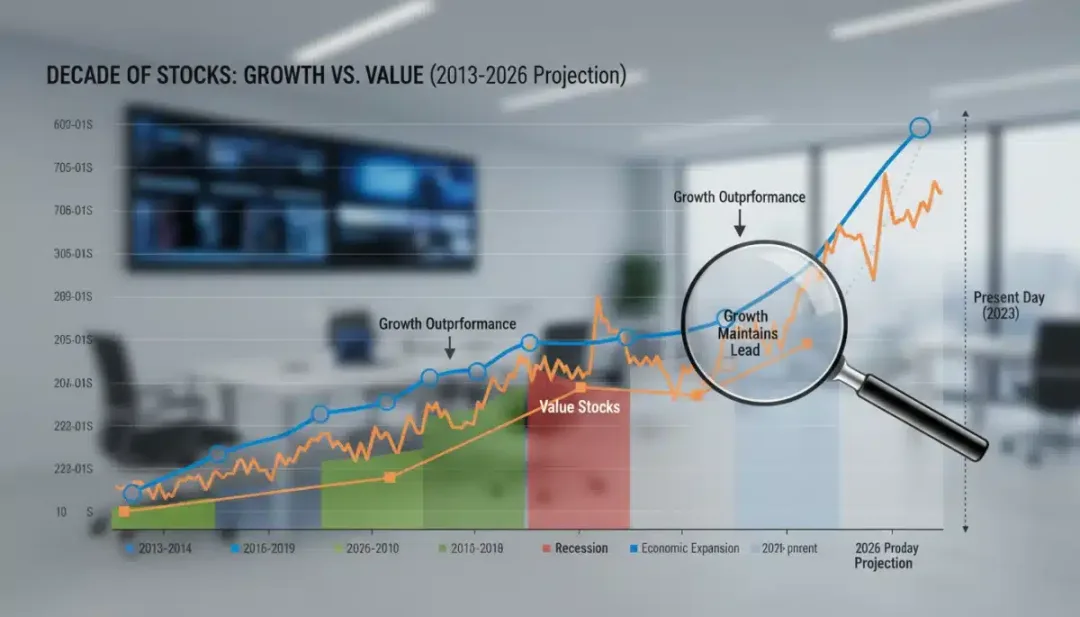
Value stocks, often mature companies trading below their intrinsic value, can provide a stable foundation and potential for capital appreciation. They tend to be less volatile than growth stocks and can offer dividend income.
Fixed-income investments, such as government and corporate bonds, offer predictability and act as a hedge against equity market downturns. They provide a steady stream of income and help preserve capital, reducing overall portfolio risk.
Combining these elements creates a balanced portfolio that can withstand various market conditions. This blend is vital for building a diversified investment portfolio that meets both growth and stability objectives.
The Importance of Regular Portfolio Rebalancing
Once a diversified investment portfolio is constructed, it is not a set-it-and-forget-it endeavor. Regular rebalancing is essential to maintain the desired asset allocation, especially when allocating 20% to growth stocks.
Market fluctuations can cause certain asset classes to grow faster than others, altering the original target percentages.
Rebalancing involves selling off assets that have outperformed and buying more of those that have underperformed to bring the portfolio back to its strategic allocation.
This disciplined approach helps in locking in gains and ensures that the portfolio’s risk profile remains consistent with the investor’s objectives. Regular rebalancing is a critical component of successful portfolio management.
Establishing a Rebalancing Schedule
The frequency of rebalancing can vary, but common practices include quarterly, semi-annual, or annual reviews.
A fixed schedule helps prevent emotional decision-making and ensures consistency in maintaining the desired asset allocation.
Automated rebalancing options offered by various brokerage platforms can simplify this process for investors.
It is important to review the portfolio’s performance against its benchmarks during these periods to assess the effectiveness of the strategy.
A well-defined rebalancing schedule is a proactive measure that supports the long-term health and growth of a diversified investment portfolio. It keeps the portfolio aligned with its strategic goals.
Leveraging Market Trends and Economic Indicators for 2026
Staying informed about current market trends and economic indicators is crucial for optimizing a diversified investment portfolio.
Data on inflation, interest rates, GDP growth, and consumer spending can provide valuable insights into potential market shifts.
For 2026, understanding the trajectory of global economic recovery, technological advancements, and geopolitical stability will be particularly important.
These factors can influence the performance of various asset classes, including growth stocks.
Analyzing these indicators allows investors to make informed adjustments to their portfolio, ensuring it remains robust and responsive to the prevailing economic climate. This proactive approach is key to sustained success.
Key Economic Indicators to Monitor
Several economic indicators warrant close attention as 2026 approaches. Inflation rates, as tracked by the Consumer Price Index (CPI), directly impact purchasing power and corporate earnings.
Interest rate decisions by central banks significantly influence the cost of borrowing and the attractiveness of fixed-income investments.
GDP growth rates provide an overall picture of economic health, which can affect corporate profitability and stock market performance.
Unemployment rates and consumer confidence indices offer insights into consumer spending habits, a major driver of economic activity. Monitoring these indicators helps in fine-tuning a diversified investment portfolio.
Tax Implications and Investment Vehicles for Growth Stocks
Understanding the tax implications of investing in growth stocks is vital for maximizing net returns. Capital gains taxes, both short-term and long-term, can significantly impact profitability, especially with high-growth assets.
Utilizing tax-advantaged accounts such as 401(k)s, IRAs, or Roth IRAs can help defer or even eliminate taxes on investment gains. These vehicles are particularly beneficial for holding growth stocks, allowing investments to compound tax-free.
Consulting with a financial advisor to develop a tax-efficient investment strategy is highly recommended. This ensures that the diversified investment portfolio is optimized not only for growth but also for tax efficiency.
Choosing the Right Investment Vehicles
The choice of investment vehicle can profoundly impact the performance and tax efficiency of a growth stock allocation.
Beyond traditional brokerage accounts, exchange-traded funds (ETFs) and mutual funds offer diversified exposure to growth stocks.
ETFs tracking growth indices or specific growth sectors can provide instant diversification and lower expense ratios.
Actively managed growth mutual funds, while potentially having higher fees, offer professional management and research expertise.
For individual stock picking, direct ownership allows for precise control but requires more in-depth research and monitoring. Each vehicle has its advantages and disadvantages, depending on the investor’s preference and expertise.
Long-Term Growth Strategies and Future Outlook for 2026
Building a diversified investment portfolio with a 20% allocation to growth stocks is a long-term strategy designed to capture significant capital appreciation over several years.
This approach acknowledges that market cycles are inevitable, but consistent investment in high-quality growth companies tends to yield superior returns over the long haul.
The outlook for 2026 suggests continued innovation and expansion in key technology and healthcare sectors, providing fertile ground for growth stock opportunities.
Economic forecasts indicate a generally positive, albeit potentially volatile, environment that favors strategic investment.
Investors should remain committed to their long-term plans, resisting the urge to react impulsively to short-term market noise. A patient and disciplined approach is paramount for realizing the full potential of a growth-oriented portfolio.
Adapting to Evolving Market Conditions
While a long-term strategy is crucial, it does not mean rigidity. The ability to adapt to evolving market conditions is a hallmark of successful investing.
This involves periodically reviewing the underlying assumptions of the portfolio and making necessary adjustments.
For instance, if a particular growth sector becomes overvalued, it might be prudent to trim positions and reallocate to other promising areas.
Staying informed about technological shifts and global economic developments allows for timely and strategic modifications.
This dynamic approach ensures that the diversified investment portfolio remains aligned with current realities while still pursuing its long-term growth objectives. Flexibility is key in an ever-changing investment landscape.
| Key Point | Brief Description |
|---|---|
| Growth Stock Allocation | Strategic 20% allocation to high-growth companies for capital appreciation. |
| Diversification Benefits | Mitigates risk across various asset classes, enhancing portfolio resilience. |
| Portfolio Rebalancing | Regular adjustments maintain target asset allocation and risk profile. |
| Tax Efficiency | Utilize tax-advantaged accounts to optimize returns on growth investments. |
Frequently Asked Questions About Diversified Investment Portfolios
What defines a diversified investment portfolio?▼A diversified investment portfolio is a collection of various asset classes, such as stocks, bonds, and real estate, spread across different sectors and geographies. Its primary aim is to minimize risk by ensuring that no single investment’s poor performance significantly impacts the entire portfolio, promoting stable long-term growth.
Why allocate 20% to growth stocks in 2026?▼Allocating 20% to growth stocks in 2026 is a strategic move to capture high capital appreciation potential from rapidly expanding companies. This percentage aims to balance aggressive growth opportunities with the need for overall portfolio stability, leveraging innovation while managing inherent volatility.
How does rebalancing affect my portfolio?▼Rebalancing involves periodically adjusting your portfolio’s asset allocation back to its target percentages. This process helps maintain your desired risk level, locks in gains from outperforming assets, and ensures your diversified investment portfolio remains aligned with your long-term financial goals and investment strategy.
What are the risks associated with growth stocks?▼Growth stocks carry higher risks due to their typically higher valuations, which are often based on future earnings potential rather than current profits. This can lead to increased volatility and greater sensitivity to market downturns or changes in economic outlook, requiring careful consideration and diversification.
Should I consider tax-advantaged accounts for growth stocks?▼Yes, utilizing tax-advantaged accounts like 401(k)s or IRAs for growth stocks is highly advisable. These accounts allow investments to grow and compound tax-deferred or tax-free, significantly enhancing net returns over the long term, especially for assets with high capital appreciation potential.
Looking Ahead: Strategic Implications for Investors
The continuous focus on Building a Diversified Investment Portfolio in 2026: Allocating 20% to Growth Stocks underscores a critical strategy for navigating complex financial markets.
This approach, blending aggressive growth potential with foundational stability, positions investors to capitalize on future economic shifts and technological advancements.
What this means for investors is a call to proactive engagement: regularly assessing market trends, understanding risk exposures, and maintaining disciplined rebalancing practices.
For a comprehensive breakdown of asset allocation and managing risk, reviewing specialized resources on diversifying your portfolio via Vanguard can provide the structural frameworks needed to keep your strategy aligned with long-term goals.
As 2026 unfolds, staying informed and adaptable will be paramount to achieving sustained financial health and maximizing portfolio performance.
This Vanguard video guide is relevant because it features an investment specialist explaining the practical steps needed to construct a well-balanced, diversified portfolio.