Bocconi vs. Ivy League Finance: 2026 ROI Data Breakdown
Advertisements

This article offers a crucial data-driven breakdown of 2026 ROI for finance graduates from Bocconi University and leading Ivy League institutions. It examines curriculum strengths, career placement, and salary expectations to inform prospective students.
Understanding the financial returns on investment from these prestigious programs is vital for strategic educational choices. We provide a clear, objective analysis for those aiming for top-tier finance careers.
This comparison helps uncover the distinct advantages and potential career trajectories offered by each educational path, focusing on tangible outcomes by 2026.
The decision between pursuing a finance degree at Bocconi University or an Ivy League institution is a pivotal one for aspiring professionals. With global financial markets constantly evolving, understanding the potential return on investment (ROI) by 2026 from these elite programs has become increasingly critical. This analysis provides a data-driven breakdown, offering insights into curriculum, career prospects, and financial outcomes to aid prospective students in making informed choices regarding Bocconi Ivy League Finance ROI.
Prospective students and their families often weigh the prestige, academic rigor, and career opportunities offered by both European and American educational powerhouses. This report aims to cut through anecdotal evidence by focusing on concrete data points and projected outcomes for graduates entering the workforce in the coming years. Our objective is to present a clear picture of what each path offers in terms of long-term financial and professional growth.
By examining key metrics such as post-graduation salaries, employment rates in top financial firms, and the global reach of alumni networks, we can provide a comprehensive view. This detailed comparison will highlight the distinct advantages and potential challenges associated with each educational pathway, ensuring a more strategic approach to career planning in finance.
Curriculum Foundations: European Rigor vs. American Breadth
Bocconi University, located in Milan, Italy, is renowned for its highly specialized and quantitative approach to finance education. Its programs, such as the Master of Science in Finance, often delve deep into financial modeling, econometrics, and advanced corporate finance concepts, preparing students with a strong theoretical and practical toolkit.
In contrast, Ivy League institutions in the U.S. typically offer a broader liberal arts foundation, even within their finance-focused programs. While also rigorous, their curriculums may incorporate a wider range of interdisciplinary studies, aiming to develop well-rounded professionals with strong critical thinking and communication skills alongside financial acumen.
This fundamental difference in pedagogical approach can significantly influence a graduate's initial career trajectory and long-term adaptability in the financial sector. Understanding these distinctions is crucial when evaluating the potential Bocconi Ivy League Finance ROI.
Career Placement and Industry Access by 2026
Both Bocconi and Ivy League schools boast impressive career placement records in leading financial institutions worldwide. However, their primary geographical strengths and industry pipelines often differ, influencing where graduates tend to land their first significant roles by 2026.
Bocconi graduates frequently find themselves in top-tier investment banks, asset management firms, and consulting agencies across Europe, particularly in London, Frankfurt, and Milan. Their strong quantitative skills are highly valued in roles requiring sophisticated analytical capabilities, contributing to a solid Bocconi Ivy League Finance ROI in the European market.
Ivy League finance graduates, on the other hand, typically dominate the Wall Street landscape, securing positions in major investment banks, private equity firms, and hedge funds in New York City and other major U.S. financial hubs. Their extensive alumni networks within the American financial industry provide unparalleled access to entry-level and executive opportunities.
Geographical Dominance and Niche Specializations
Bocconi's strength lies in its deep connections to the European financial ecosystem, offering a direct pipeline to roles within the EU and UK. Many graduates leverage their multilingual skills and international perspective to secure positions in cross-border finance, a distinct advantage.
Ivy League schools, with their strong ties to American capital markets, often provide a more direct route into highly competitive areas like M&A, leveraged finance, and quantitative trading within the U.S. market. Their brand recognition is often a significant factor in securing these coveted roles, impacting the overall Bocconi Ivy League Finance ROI.
- Bocconi: Strong in European investment banking, asset management, and luxury finance.
- Ivy League: Dominant in U.S. investment banking, private equity, and hedge funds.
- Both: Excellent pathways to global consulting firms and fintech startups.
Post-Graduation Salaries and Earning Potential
When assessing Bocconi Ivy League Finance ROI, post-graduation salaries are a critical metric. While exact figures vary based on program, role, and location, general trends indicate competitive starting salaries for graduates from both types of institutions.
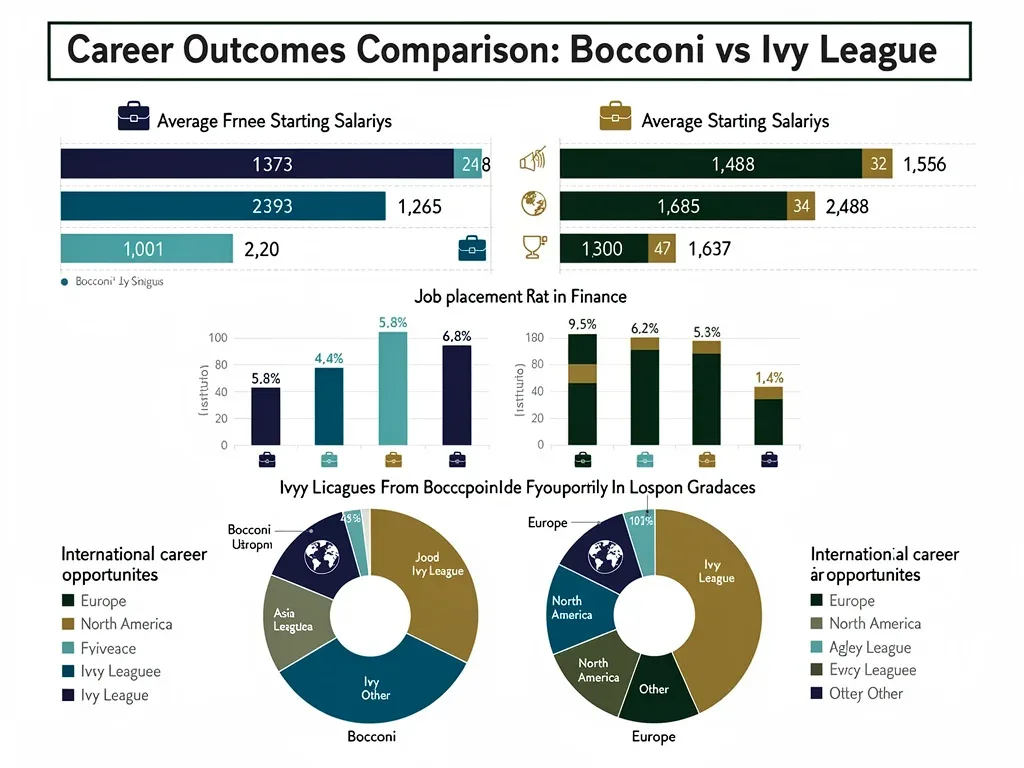
Data from recent years suggests that Ivy League finance graduates often command slightly higher average starting salaries in the immediate post-graduation period, particularly for roles in New York City. This can be attributed to the higher cost of living in major U.S. financial centers and the intense competition for top talent.
However, Bocconi graduates also secure highly competitive compensation packages, especially when considering purchasing power parity in European cities. Over time, the earning potential from both paths converges significantly, with career progression playing a more substantial role than initial differences in salary.
Long-Term Financial Trajectories and Growth
The long-term financial trajectory for graduates from both Bocconi and Ivy League schools is typically robust, with significant opportunities for salary growth and bonuses. The critical factor often becomes the individual's performance, networking capabilities, and ability to adapt to market changes.
For those focused on rapid career advancement and early high-income potential within specific U.S. finance sectors, Ivy League programs might offer a marginal edge initially. However, Bocconi's strong quantitative foundation and international exposure often lead to equally impressive career paths and substantial wealth accumulation over a decade.
- Initial Salaries: Ivy League graduates often start slightly higher in the U.S.
- European Salaries: Bocconi graduates are highly competitive within the EU and UK.
- Long-Term Growth: Both offer strong potential, dependent on individual performance.
Alumni Networks and Global Reach
The strength and reach of an institution's alumni network are invaluable assets for career development, mentorship, and job opportunities. Both Bocconi and Ivy League schools boast powerful, extensive alumni communities that can significantly impact a graduate's professional journey, directly influencing the Bocconi Ivy League Finance ROI.
Ivy League alumni networks are famously strong, deeply entrenched in various industries across the U.S. and globally. Their members often hold influential positions, providing unparalleled access to job leads, mentorship, and business connections, particularly within North American financial markets.
Bocconi's alumni network, while perhaps less globally dispersed than some Ivy League counterparts, is exceptionally strong within Europe and increasingly influential in major financial centers worldwide. Its graduates benefit from a tightly knit community that supports career advancement in international finance, making a compelling case for Bocconi Ivy League Finance ROI.
Leveraging Connections for 2026 Success
For graduates entering the workforce in 2026, leveraging these networks will be crucial. Ivy League graduates can tap into well-established pathways in U.S. finance, often finding mentors and sponsors within their university's extensive network.
Bocconi alumni are particularly effective in facilitating transitions into European markets and supporting careers with an international focus. Their network is especially valuable for those seeking roles that bridge different financial cultures and regulatory environments, enhancing the long-term Bocconi Ivy League Finance ROI.
Program Costs and Financial Aid Considerations
The cost of tuition and living expenses is a significant factor in calculating the overall Bocconi Ivy League Finance ROI. Understanding these financial commitments is essential for prospective students and their families to plan effectively.
Ivy League institutions, while offering world-class education, typically come with very high tuition fees, often exceeding $70,000 per year for graduate programs, not including living expenses. While substantial financial aid and scholarships are available, the total cost can still be a considerable burden for many students.
Bocconi University's tuition fees, while still significant for international standards, are generally more affordable than those of top-tier U.S. universities. Combined with a relatively lower cost of living in Milan compared to major U.S. cities, the overall financial outlay can be more manageable, positively impacting the Bocconi Ivy League Finance ROI calculation.
Scholarships, Loans, and Investment Payback
Both types of institutions offer various forms of financial aid, including merit-based scholarships, need-based grants, and student loans. Prospective students should thoroughly research these options to mitigate the financial burden and improve their overall ROI.
The payback period for educational investments is a key aspect of ROI. While Ivy League graduates might see slightly higher initial salaries, the lower overall cost of a Bocconi education could potentially lead to a faster break-even point, or a higher net financial gain over time, depending on individual circumstances and career progression.
Curriculum Relevance and Future-Proofing for 2026
The rapidly evolving financial landscape demands curriculums that are not only rigorous but also forward-looking. Both Bocconi and Ivy League programs are constantly adapting to integrate emerging trends like fintech, sustainable finance, and big data analytics, ensuring their graduates are well-prepared for 2026 and beyond, which is crucial for Bocconi Ivy League Finance ROI.
Bocconi has been particularly proactive in incorporating data science and quantitative methods into its finance programs, reflecting the increasing demand for professionals who can navigate complex datasets and algorithmic trading. This specialization provides a distinct edge in certain high-tech financial roles.
Ivy League schools, with their broader resources, often offer a wider array of specialized tracks and research opportunities, allowing students to delve into niche areas of finance. Their emphasis on interdisciplinary studies also prepares graduates to tackle complex problems that require a holistic understanding of business, economics, and technology.
Adaptability in a Dynamic Financial World
The ability to adapt to new technologies and market paradigms will be paramount for finance professionals in 2026. Both educational paths equip students with foundational knowledge, but their approaches to fostering adaptability differ.
Bocconi's intensive, specialized training often creates experts in specific financial domains, while Ivy League's broader education might foster more versatile generalists. The choice depends on whether a prospective student prefers deep specialization or a wider skill set, both contributing to a strong Bocconi Ivy League Finance ROI.
Cultural Immersion and Global Perspective
Studying in Milan offers a unique cultural immersion experience, distinct from the American university environment. Bocconi students are exposed to European business practices, diverse cultural perspectives, and often become proficient in multiple languages, which is a significant advantage in global finance and contributes to the overall Bocconi Ivy League Finance ROI.
Ivy League institutions, while attracting a diverse international student body, are deeply rooted in American culture and business norms. Students gain an in-depth understanding of the U.S. market, its regulatory environment, and its unique corporate culture, which is invaluable for careers within the American financial system.
Impact on International Career Trajectories
For individuals aspiring to careers with a strong international component, Bocconi's European location and emphasis on global finance can be a distinct advantage. Graduates are often well-prepared for roles that require navigating different legal, economic, and cultural frameworks.
Ivy League graduates seeking international careers often leverage their strong academic credentials and the global recognition of their institutions to secure positions abroad. However, their primary focus remains on the U.S. market, and adapting to international contexts might require additional effort compared to Bocconi alumni, impacting the nuanced Bocconi Ivy League Finance ROI for global roles.

| Key Differentiator | Impact on 2026 ROI |
|---|---|
| Curriculum Focus | Bocconi: Deep quantitative specialization. Ivy League: Broader, interdisciplinary approach. |
| Career Geography | Bocconi: Strong in Europe. Ivy League: Dominant in U.S. financial hubs. |
| Cost & Aid | Bocconi: Generally lower tuition/living. Ivy League: Higher costs, extensive aid. |
| Alumni Network | Bocconi: Strong European/global connections. Ivy League: Powerful U.S. industry presence. |
Frequently Asked Questions About Finance ROI
What is the primary difference in curriculum focus?▼Bocconi typically offers a more specialized and quantitative finance curriculum, emphasizing deep technical skills. Ivy League programs often provide a broader, more interdisciplinary education, integrating finance with liberal arts and critical thinking, which can influence Bocconi Ivy League Finance ROI.
Which institution offers better career prospects in the U.S.?▼Ivy League institutions generally have stronger direct pipelines to top-tier finance roles on Wall Street and across the U.S. due to established networks. Bocconi graduates, while successful globally, might require more effort to break into the highly competitive U.S. market, affecting Bocconi Ivy League Finance ROI.
Are Bocconi degrees recognized globally?▼Yes, Bocconi University holds a strong international reputation, particularly in finance and economics. Its degrees are highly regarded by multinational firms and financial institutions worldwide, ensuring a competitive standing in global job markets and contributing positively to Bocconi Ivy League Finance ROI.
How do tuition costs impact overall ROI?▼Lower tuition and living expenses at Bocconi can lead to a potentially faster payback period for educational investment, even with comparable salaries. Higher Ivy League costs, despite potentially higher initial salaries, might extend the time to recoup the investment, influencing the net Bocconi Ivy League Finance ROI.
What about networking opportunities at each?▼Both have powerful alumni networks. Ivy League networks are deeply embedded in U.S. finance, while Bocconi's network is exceptionally strong in Europe and growing globally. The effectiveness of each network depends on your desired career geography and sector, impacting Bocconi Ivy League Finance ROI.
Looking Ahead: Strategic Choices for Future Finance Leaders
The choice between Bocconi and an Ivy League institution for a finance degree is not merely about prestige, but about aligning educational pathways with specific career aspirations and financial goals for 2026 and beyond. This data-driven breakdown underscores that both paths offer exceptional opportunities, albeit with distinct geographical and curricular strengths.
Prospective students must critically evaluate their desired market—European or American—their preference for specialized versus broad education, and their financial capacity. The optimal Bocconi Ivy League Finance ROI is ultimately a personalized calculation, influenced by individual career paths, networking efforts, and adaptability to an ever-changing financial landscape.
As the financial world continues to evolve with technological advancements and new global challenges, the analytical rigor and strategic thinking fostered by both Bocconi and Ivy League programs will remain invaluable. Understanding these nuances provides a stronger foundation for making one of the most significant educational decisions of a lifetime.