Credit Card Debt Consolidation 2026: Reduce Payments by 15%

Latest developments on Credit Card Debt Consolidation in 2026: A Step-by-Step Guide to Reducing High-Interest Payments by 15%, with key facts, verified sources and what readers need to monitor next in the United States, presented clearly in English (United States).
Credit Card Debt Consolidation in 2026: A Step-by-Step Guide to Reducing High-Interest Payments by 15% is shaping today’s agenda with new details released by financial experts and industry sources. This update prioritizes what changed, why it matters, and what to watch next, in a straightforward news format.
Understanding the Landscape of Credit Card Debt in 2026
As 2026 unfolds, the financial landscape for consumers carrying credit card debt presents both challenges and opportunities. High-interest rates continue to burden millions, making effective debt management strategies more critical than ever.
Understanding these prevailing conditions is the first step towards implementing a successful strategy for Credit Card Debt Consolidation in 2026. The goal remains clear: to alleviate financial pressure and pave a path to greater stability.
Current economic indicators suggest a persistent need for proactive financial planning, particularly for those grappling with multiple credit card balances. Strategic consolidation can offer significant relief from these ongoing pressures.
The Imperative for Credit Card Debt Consolidation
The rising cost of living and fluctuating interest rates have made managing multiple high-interest credit card accounts increasingly difficult for many American households. This environment underscores the urgency of finding viable solutions to reduce financial strain.
For individuals burdened by spiraling interest payments, Credit Card Debt Consolidation in 2026 emerges as a powerful tool. It provides a structured approach to simplify payments and potentially lower overall costs.
Ignoring the problem can lead to further financial distress, including damaged credit scores and increased debt. Therefore, taking decisive action through consolidation is not merely an option but often a necessity for long-term financial health.
Why Act Now for Debt Consolidation
The current financial climate makes timely action crucial for those considering debt consolidation. Delaying can result in accumulating more interest, making the debt even harder to manage in the future.
Proactive engagement with consolidation strategies allows individuals to seize favorable terms and secure a more manageable financial future. The benefits of acting swiftly often translate into significant savings over time.
Step-by-Step Guide to Credit Card Debt Consolidation in 2026
Embarking on a debt consolidation journey requires a methodical approach, starting with a comprehensive assessment of your current financial situation. This involves detailing all credit card balances, interest rates, and minimum payments.
Once you have a clear picture of your debt, the next step is to explore the various consolidation options available. Each option comes with its own set of advantages and considerations, tailored to different financial profiles.
Selecting the right strategy is paramount to achieving the desired outcome of reducing high-interest payments by 15% or more. This guide will walk you through the primary methods for Credit Card Debt Consolidation in 2026.
Option 1: Balance Transfer Credit Cards
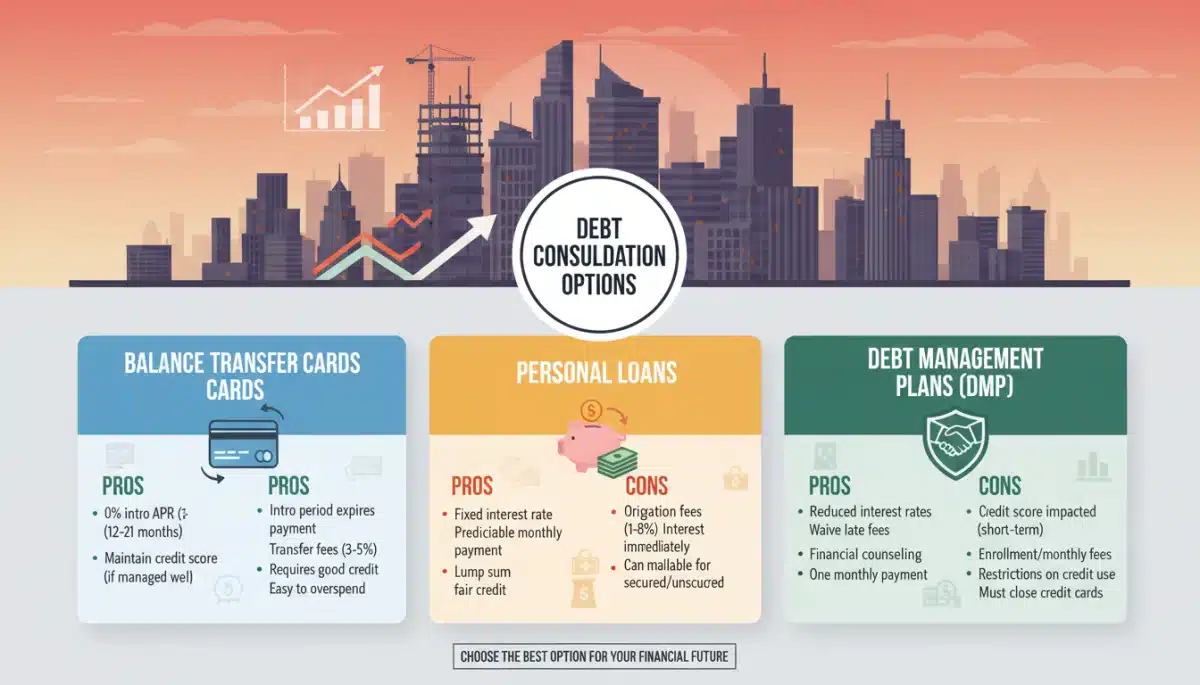
Balance transfer credit cards offer an attractive solution for those with good credit scores, allowing them to move high-interest balances to a new card with a promotional 0% or low-interest APR for an introductory period.
This method provides a crucial window of opportunity to pay down the principal without the burden of accumulating interest. However, it requires discipline to avoid incurring new debt on the transferred card.
It’s vital to be aware of any balance transfer fees, which typically range from 3% to 5% of the transferred amount. Carefully calculate if the savings from the low APR outweigh these initial costs to maximize the benefits of Credit Card Debt Consolidation in 2026.
Option 2: Personal Loans for Debt Consolidation
A personal loan can consolidate multiple credit card debts into a single, fixed-rate monthly payment, simplifying your finances and potentially lowering your overall interest rate. This option is particularly beneficial for those with a strong credit history.
Unlike balance transfer cards, personal loans have a set repayment schedule, providing a clear endpoint to your debt. This predictability can be a significant advantage for budgeting and financial planning.
Shop around for the best interest rates and terms from various lenders. A lower interest rate on a personal loan can substantially reduce your total repayment amount, making it an effective strategy for Credit Card Debt Consolidation in 2026.
Debt Management Plans and Credit Counseling
For individuals struggling with significant credit card debt and potentially lower credit scores, a debt management plan (DMP) offered through a credit counseling agency can be a viable path. These plans restructure your payments with creditors.
Credit counseling agencies work with your creditors to negotiate lower interest rates and waive fees, consolidating your payments into a single, manageable monthly sum. This offers a structured approach to debt repayment without taking on new loans.
While a DMP can be highly effective, it typically involves closing your credit card accounts and making timely payments for several years. It’s an excellent option for those seeking supervised assistance in their journey towards Credit Card Debt Consolidation in 2026.
The Role of Non-Profit Credit Counseling
Non-profit credit counseling agencies provide valuable services, including budget analysis, financial education, and negotiating with creditors on your behalf. Their primary goal is to help consumers achieve financial stability.
These agencies often charge minimal or no fees for their services, making them an accessible resource for many. They are a trustworthy avenue for exploring debt relief options and developing a personalized repayment strategy.
When considering a DMP, ensure the agency is reputable and accredited. The right agency can significantly impact the success of your Credit Card Debt Consolidation in 2026 efforts, offering expert guidance and support.
Strategic Considerations for 2026
As you navigate the options for Credit Card Debt Consolidation in 2026, several strategic factors warrant careful consideration. The current economic climate, including inflation and interest rate trends, will influence the most effective approach.
It is crucial to assess your credit score, as it directly impacts the interest rates and terms you will qualify for with balance transfer cards or personal loans. A higher score generally unlocks more favorable conditions.
Additionally, evaluate your spending habits and financial discipline. Successful consolidation is not just about restructuring debt, but also about addressing the underlying behaviors that led to its accumulation, ensuring long-term financial health.
Impact of Economic Forecasts on Consolidation
Economic forecasts for 2026 suggest a dynamic environment that could influence the availability and terms of consolidation products. Staying informed about these trends is essential for making timely and advantageous decisions.
Potential shifts in the Federal Reserve’s interest rate policies, for example, could impact the attractiveness of personal loans or balance transfer offers. Monitoring these developments will allow for strategic timing of your consolidation efforts.
Consulting with a financial advisor can provide valuable insights into how macroeconomic factors might affect your specific consolidation strategy. This expert perspective can help optimize your plan for Credit Card Debt Consolidation in 2026.
Achieving a 15% Reduction in Payments
The ambitious goal of reducing high-interest payments by 15% through Credit Card Debt Consolidation in 2026 is highly attainable with the right strategy and diligent execution. This reduction can free up significant funds monthly.
To achieve this target, a thorough comparison of interest rates and fees across different consolidation products is essential. Even a few percentage points difference can translate into substantial savings over the repayment period.
Beyond the initial consolidation, maintaining a disciplined budget and avoiding new credit card debt are critical for sustaining the savings and ultimately achieving financial freedom. This holistic approach ensures lasting success.

Preventing Future Credit Card Debt
Successfully consolidating credit card debt is a significant achievement, but preventing its recurrence is equally important for long-term financial well-being. This requires a fundamental shift in financial habits and a commitment to responsible spending.
Establishing and adhering to a realistic budget is paramount. Tracking income and expenses helps identify areas where spending can be reduced, ensuring that you live within your means and avoid accumulating new debt.
Building an emergency fund is another critical step. Having a financial cushion for unexpected expenses can prevent reliance on credit cards during unforeseen circumstances, reinforcing the success of your Credit Card Debt Consolidation in 2026.
Building a Strong Financial Foundation
Beyond immediate debt relief, the goal should be to build a robust financial foundation that supports future growth and stability. This includes improving your credit score, increasing savings, and investing wisely.
Regularly reviewing your financial plan and making adjustments as your circumstances change will ensure continued progress. Financial literacy and continuous learning are key components of this ongoing process.
The journey of Credit Card Debt Consolidation in 2026 is not just about eliminating debt; it’s about transforming your financial outlook and securing a prosperous future. Proactive management sets the stage for lasting financial health.
| Key Point | Brief Description |
|---|---|
| Assess Debt | Catalog all credit card balances, rates, and minimums. |
| Choose Method | Select balance transfer, personal loan, or DMP. |
| Execute Plan | Apply for chosen option and consolidate debts. |
| Prevent Recurrence | Budget, save, and avoid new credit card debt. |
Frequently Asked Questions About Debt Consolidation
Credit Card Debt Consolidation involves combining multiple high-interest credit card debts into a single, more manageable payment. This is typically achieved through a balance transfer card, a personal loan, or a debt management plan, aiming to reduce the overall interest paid and simplify your monthly obligations, making your financial life easier.
Yes, achieving a 15% reduction in interest payments is a realistic goal through strategic Credit Card Debt Consolidation in 2026. This often depends on your credit score and the consolidation method chosen. Balance transfer cards with promotional 0% APRs or personal loans with lower fixed rates are common avenues to realize such savings.
The primary options for Credit Card Debt Consolidation in 2026 include balance transfer credit cards, personal loans from banks or credit unions, and debt management plans offered by credit counseling agencies. Each method has specific eligibility requirements and benefits, catering to different financial situations and credit profiles.
Your credit score significantly impacts the interest rates and terms you qualify for. A higher credit score generally leads to better offers on balance transfer cards and personal loans, making it easier to secure a lower overall interest rate and reduce payments. A lower score might direct you towards debt management plans.
After successfully consolidating your debt through Credit Card Debt Consolidation in 2026, it’s crucial to establish and stick to a budget, avoid incurring new credit card debt, and build an emergency fund. These actions will help prevent future debt accumulation and ensure long-term financial stability and freedom from high-interest payments.
Looking Ahead
The landscape for Credit Card Debt Consolidation in 2026 underscores the ongoing need for informed financial decisions. The strategies outlined provide a clear framework for individuals seeking to reduce high-interest payments and achieve greater financial control. Continuous monitoring of economic trends and personal spending habits will remain critical for sustained success.