The Future of US Personal Loans: Trends and Best Practices for 2026 Borrowers

Latest developments on The Future of US Personal Loans: Trends and Best Practices for 2026 Borrowers, with key facts, verified sources and what readers need to monitor next in Estados Unidos, presented clearly in Inglês (Estados Unidos) (en-US).
The Future of US Personal Loans: Trends and Best Practices for 2026 Borrowers is shaping today’s agenda with new details released by officials and industry sources. This update prioritizes what changed, why it matters and what to watch next, in a straightforward news format.
Understanding the Evolving Landscape of US Personal Loans
The personal loan market in the United States is undergoing significant transformation, driven by technological advancements, shifting consumer behaviors, and evolving regulatory frameworks. By 2026, borrowers will encounter a lending environment vastly different from previous years.
These changes necessitate a proactive approach from individuals seeking financing, requiring them to be well-informed about new products, application processes, and risk management strategies. Adapting to these shifts will be crucial for securing favorable loan terms.
Staying ahead of these trends is not merely advantageous but essential for making sound financial decisions. Understanding the dynamics of US Personal Loans 2026 will empower borrowers to navigate the market effectively and responsibly.
Key Technological Innovations Shaping Lending
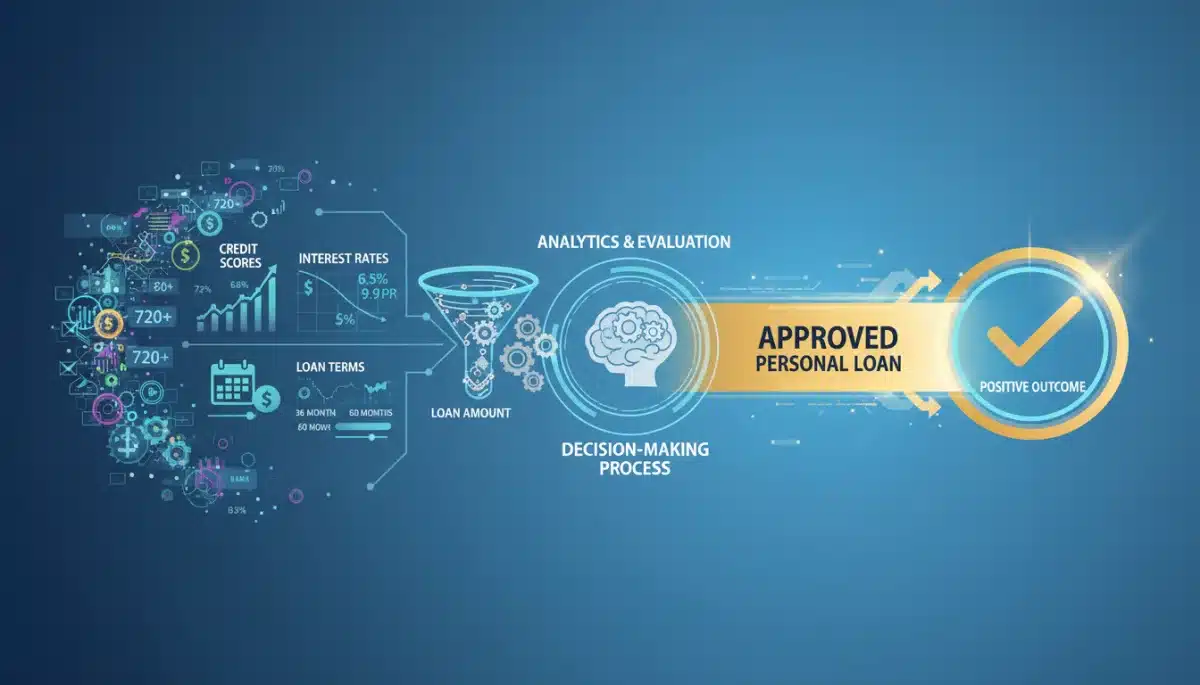
Artificial intelligence (AI) and machine learning (ML) are becoming central to how lenders assess creditworthiness and process applications, leading to faster, more personalized loan offers. These technologies allow for a more nuanced evaluation of an applicant’s financial health beyond traditional credit scores.
Blockchain technology is also beginning to influence the lending sector, promising enhanced security, transparency, and efficiency in loan transactions. While still nascent, its potential to streamline processes and reduce fraud is considerable.
The rise of open banking initiatives further contributes to this technological revolution, enabling borrowers to share their financial data securely with lenders, leading to more competitive and tailored personal loan products. This data-driven approach redefines the future of US Personal Loans 2026.
AI and Machine Learning in Credit Assessment
AI algorithms analyze vast datasets, including banking activity, payment history, and even alternative data sources, to provide a holistic view of a borrower’s financial reliability. This can benefit individuals with thin credit files or those historically underserved by traditional lending models.
The speed and accuracy of AI-driven assessments mean that loan approvals can happen in minutes, not days, significantly improving the borrower experience. This efficiency is a cornerstone of the evolving landscape for US Personal Loans 2026.
- Faster loan application processing times.
- More personalized interest rates and loan terms.
- Improved access to credit for a broader range of applicants.
The Impact of Open Banking on Loan Access
Open banking facilitates secure data sharing between financial institutions and third-party providers, giving lenders a more comprehensive understanding of a borrower’s financial behavior. This deeper insight can lead to more accurate risk assessments and better loan products.
For borrowers, this means potentially lower interest rates and more flexible terms, as lenders can confidently offer products tailored to their specific financial situation. It democratizes access to personal loans, fostering a more inclusive financial ecosystem.
This collaborative approach fundamentally alters how consumers interact with financial services, making the application process for US Personal Loans 2026 more transparent and user-friendly.
Emerging Trends in Personal Loan Products
The market is seeing an increase in specialized personal loan products designed to meet specific borrower needs, moving beyond generic offerings. These include loans for debt consolidation, home improvements, and even eco-friendly initiatives, reflecting a more segmented approach.
Additionally, the integration of financial wellness tools and advisory services with personal loan offerings is becoming more common. Lenders are increasingly providing resources to help borrowers manage their finances better, fostering long-term financial health.
Flexible repayment options, such as bi-weekly payments or the ability to skip a payment, are also gaining traction, offering borrowers greater control and adaptability in managing their debt. These innovations define the future of US Personal Loans 2026.
Regulatory Outlook and Consumer Protection in 2026
Regulatory bodies are continually adapting to the rapid changes in the personal loan sector, with a focus on consumer protection, data privacy, and fair lending practices. New regulations are expected to address the ethical implications of AI in lending and ensure transparency in digital loan products.
The Consumer Financial Protection Bureau (CFPB) and state-level regulators will likely play a significant role in shaping the operational guidelines for lenders, aiming to prevent predatory lending and ensure equitable access to credit. These efforts safeguard borrowers in the evolving market for US Personal Loans 2026.
Borrowers should remain aware of their rights and the resources available to them, as regulatory changes can impact loan terms, dispute resolution processes, and privacy protections. Informed consumers are better equipped to navigate the complexities of personal finance.
Data Privacy and Security in Digital Lending
With more personal financial data being shared digitally, robust data privacy and security measures are paramount. Lenders are investing heavily in encryption, multi-factor authentication, and fraud detection systems to protect sensitive borrower information.
Regulatory frameworks like the California Consumer Privacy Act (CCPA) and potential federal equivalents will continue to influence how personal data is collected, stored, and used by lenders. Compliance with these standards is critical for maintaining consumer trust.
Borrowers must also take responsibility for their digital security, using strong passwords and being vigilant against phishing attempts, especially when applying for US Personal Loans 2026 online.
Best Practices for Borrowers in 2026
For individuals seeking personal loans in the coming years, a strategic approach will yield the best results. This includes maintaining a strong credit profile, understanding the terms and conditions of loan offers, and leveraging technological tools for financial management.
Proactive financial planning, such as budgeting and saving, will remain fundamental, regardless of how advanced lending becomes. A solid financial foundation enhances a borrower’s attractiveness to lenders and improves their ability to manage debt.
Comparing multiple loan offers from various lenders will be more important than ever, given the diversity of products and interest rates available. This due diligence ensures borrowers secure the most favorable terms for their US Personal Loans 2026.
Building and Maintaining a Strong Credit Score
A high credit score remains a cornerstone of securing favorable personal loan terms. Regularly checking credit reports for inaccuracies, paying bills on time, and managing existing debt responsibly are essential practices.
Beyond traditional credit scores, some lenders are increasingly considering alternative data, such as utility payments and rental history, to assess creditworthiness. Understanding these new metrics can help borrowers strengthen their financial profile.
- Monitor credit reports regularly for errors.
- Pay all bills on time and in full whenever possible.
- Keep credit utilization low to demonstrate responsible credit management.
Leveraging Digital Tools for Loan Management
Numerous mobile apps and online platforms are available to help borrowers track their loan payments, monitor interest rates, and manage their overall financial health. These tools provide real-time insights and reminders, preventing missed payments.
Many lenders offer their own portals for managing personal loans, providing transparency into repayment schedules, outstanding balances, and interest accrued. Utilizing these resources can simplify debt management significantly.
Embracing these digital solutions can empower borrowers to stay organized and informed, ensuring they effectively manage their US Personal Loans 2026 and avoid potential pitfalls.
The Role of Financial Literacy in Future Borrowing
As the personal loan market becomes more sophisticated, financial literacy will be an even more critical skill for borrowers. Understanding complex loan terms, interest calculations, and the implications of various repayment structures is vital.
Educational resources from government agencies, non-profit organizations, and even some lenders are readily available to help consumers enhance their financial knowledge. Taking advantage of these resources can lead to better borrowing decisions.
Empowering oneself with financial knowledge is the best defense against predatory practices and helps ensure that personal loans serve as a tool for financial advancement, not a burden. This is key for navigating US Personal Loans 2026 effectively.
Impact of Economic Climate on Personal Loans
The broader economic environment, including inflation rates, employment levels, and interest rate policies set by the Federal Reserve, will continue to exert a significant influence on the personal loan market. These factors directly affect lending rates and borrower demand.
Economic stability generally leads to lower interest rates and more accessible credit, while periods of uncertainty can result in stricter lending criteria and higher costs for personal loans. Borrowers must consider these macroeconomic forces when seeking financing.
Staying informed about economic forecasts and central bank policies will enable borrowers to anticipate market shifts and time their personal loan applications strategically, optimizing their chances of securing favorable terms for US Personal Loans 2026.
Alternative Lending Options and Their Growth
Beyond traditional banks and credit unions, alternative lending platforms, including peer-to-peer (P2P) lenders and fintech companies, are expected to continue their rapid growth. These platforms often offer more flexible criteria and faster processing times.
While alternative lenders can provide valuable options, particularly for those with less-than-perfect credit, borrowers must exercise due diligence to understand their terms, fees, and regulatory oversight. Not all alternative lenders operate with the same transparency.
Exploring these diverse lending avenues can significantly broaden a borrower’s options, but a careful comparison of offerings is essential to ensure a responsible borrowing experience in the context of US Personal Loans 2026.
| Key Trend | Description for 2026 Borrowers |
|---|---|
| AI-Driven Lending | Faster approvals and personalized rates through advanced data analysis. |
| Open Banking | Secure data sharing for competitive and tailored loan offers. |
| Specialized Products | Loans tailored for specific needs, with flexible repayment options. |
| Regulatory Focus | Increased consumer protection and data privacy in digital lending. |
Frequently Asked Questions About US Personal Loans in 2026
AI will likely lead to faster application processing and more personalized interest rates, as lenders use advanced algorithms to assess creditworthiness beyond traditional scores. This can potentially offer better terms for a wider range of borrowers.
Open banking enables secure sharing of your financial data with lenders, providing them with a more comprehensive view of your financial health. This can result in more competitive and customized loan offers tailored to your specific situation.
Yes, regulators are focusing on consumer protection, data privacy, and ethical AI use in lending. Borrowers should expect evolving guidelines that aim to ensure fair lending practices and enhance transparency in the digital loan market.
Key best practices include maintaining a strong credit score, comparing multiple loan offers, understanding all terms and conditions, and leveraging digital tools for effective loan management. Financial literacy will be more crucial than ever.
Alternative lenders, including fintech companies and P2P platforms, are expected to continue growing, offering flexible options. Borrowers should carefully evaluate their terms, fees, and regulatory compliance before committing to ensure responsible borrowing.
Looking Ahead: Navigating the Future of US Personal Loans
The landscape of US Personal Loans 2026 promises both opportunities and challenges for borrowers. Staying abreast of technological advancements, regulatory shifts, and economic indicators will be paramount for making informed financial decisions. The emphasis will increasingly be on personalized, data-driven lending, requiring borrowers to enhance their financial literacy and engage actively with digital tools. This proactive approach will define success in securing and managing personal loans in the coming years.