Economic Forecast 2026: Inflation Dip & Household Budget Impact
Latest developments on 2026 Inflation Forecast, with key facts, verified sources and what readers need to monitor next in Estados Unidos, presented clearly in Inglês (Estados Unidos) (en-US).
Economic Forecast 2026: Experts Predict a 3% Dip in Inflation by Mid-Year – What This Means for Your Household Budget. is shaping today’s agenda with new details released by officials and industry sources. This update prioritizes what changed, why it matters and what to watch next, in a straightforward news format.
The anticipated decline to a 3% inflation rate by mid-2026 marks a significant shift from recent trends, offering a potential reprieve for consumers. This projection, widely discussed among leading economic institutions, suggests a gradual easing of price pressures across various sectors. Understanding the nuances of this 2026 Inflation Forecast is essential for every household.
Financial experts emphasize that while a 3% inflation rate is still above the Federal Reserve’s long-term target, it represents a considerable improvement over the elevated rates experienced in previous years. This moderation in inflation could translate into more stable purchasing power for American families. The implications for savings, investments, and daily expenditures are profound, making the 2026 Inflation Forecast a critical topic for financial planning.
This comprehensive analysis delves into the factors driving this optimistic outlook, the potential challenges that could alter the trajectory, and practical strategies for households to adapt. We will explore how different aspects of your financial life, from grocery bills to mortgage rates, could be influenced by this projected economic shift. Staying informed about the 2026 Inflation Forecast allows for proactive financial management.
Understanding the 2026 Inflation Forecast: A Deeper Dive
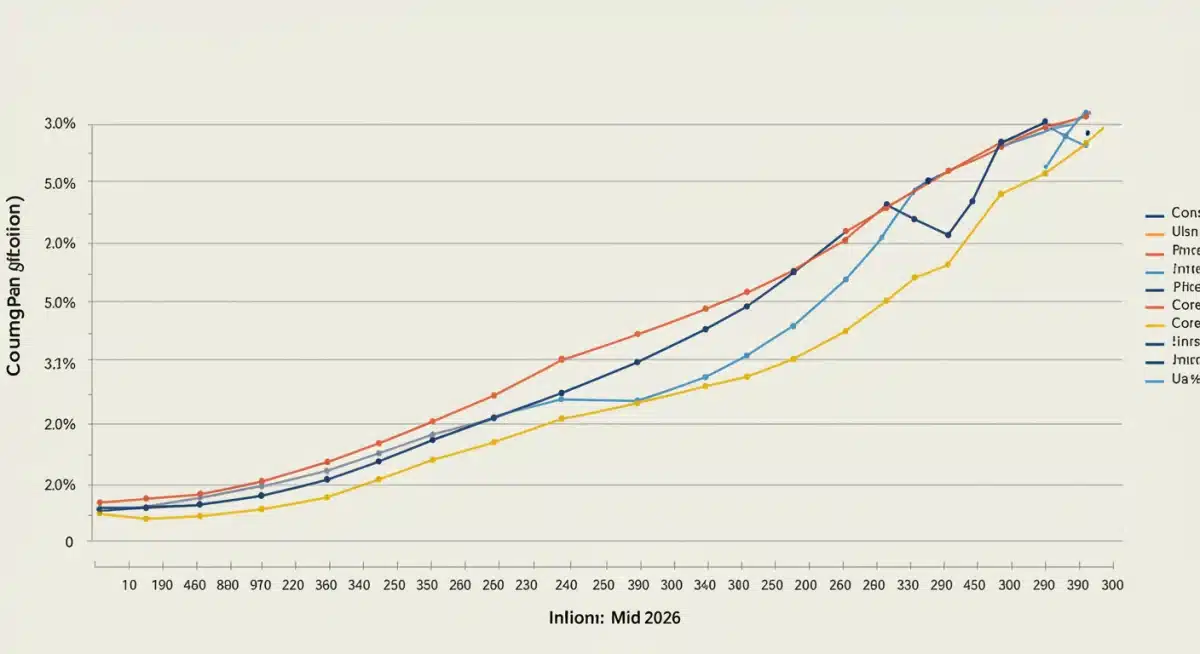
The latest economic projections for 2026 suggest a notable deceleration in inflation, with many experts anticipating a 3% dip by mid-year. This forecast is a consensus among several leading financial institutions and government agencies, reflecting a careful analysis of current economic indicators and policy interventions.
This projected reduction in inflation stems from a combination of factors, including the anticipated winding down of supply chain disruptions, a moderation in consumer demand, and the lagged effects of monetary policy tightening. The Federal Reserve’s aggressive interest rate hikes over the past year are expected to continue dampening inflationary pressures. The overall 2026 Inflation Forecast provides a cautiously optimistic outlook for the economy.
While the 3% target is a significant improvement, it is crucial to understand that this is an average, and inflation rates for specific goods and services may vary. Households should remain vigilant and assess how these broader trends translate to their individual spending patterns. The nuances of the 2026 Inflation Forecast are complex and require careful consideration.
Key Drivers Behind the Projected Dip
Several macroeconomic forces are converging to create the conditions for a projected 3% dip in inflation by mid-2026. Global supply chains, which were severely strained during the pandemic, are showing signs of normalization, leading to reduced costs for businesses and, eventually, consumers. This easing of supply-side pressures is a primary contributor to the positive 2026 Inflation Forecast.
Furthermore, the cumulative impact of the Federal Reserve’s monetary policy tightening is expected to fully manifest by 2026. Higher interest rates have worked to cool down an overheated economy, reducing aggregate demand and thereby alleviating price pressures. This deliberate policy action is a cornerstone of the optimistic 2026 Inflation Forecast.
Energy prices, a significant component of inflation, are also expected to stabilize or even slightly decline, assuming no major geopolitical disruptions. A more stable energy market would have a ripple effect across various sectors, further contributing to the overall moderation of inflation. These combined factors underpin the promising 2026 Inflation Forecast.
- Normalized supply chains reducing production costs globally.
- Federal Reserve’s sustained interest rate hikes cooling demand.
- Stabilization of global energy prices impacting transportation and utility costs.
Impact on Household Budgets: What to Expect
A 3% dip in inflation by mid-2026 could bring tangible relief to household budgets, though the extent of this relief will vary. Consumers may find that their purchasing power is less eroded by rising prices, allowing their incomes to stretch further. This positive shift is a direct consequence of the 2026 Inflation Forecast.
For many families, this could mean a reduction in the rate of increase for everyday expenses, from groceries to gasoline, making it easier to manage monthly expenditures. While prices may not necessarily decrease, the rate at which they increase is expected to slow significantly. The practical implications of the 2026 Inflation Forecast are considerable for daily living.
However, it’s important to note that some sectors might still experience higher-than-average inflation due to specific market dynamics or persistent demand. Households will need to remain strategic in their spending and budgeting. Understanding the full scope of the 2026 Inflation Forecast is key to effective financial planning.
Grocery Bills and Everyday Essentials
One of the most immediate and noticeable effects of a falling inflation rate is typically seen in the cost of groceries and other everyday essentials. Families have faced significant increases in food prices over the past few years, impacting their ability to maintain their desired diets and lifestyle. The 2026 Inflation Forecast offers hope for some relief in this critical area.
With a 3% dip in inflation, the rate at which grocery prices rise is expected to slow down, potentially even stabilizing for certain items. This doesn’t mean prices will revert to pre-inflation levels, but the relentless upward march should ease considerably. This change, driven by the 2026 Inflation Forecast, could free up more disposable income for other needs or savings.
Consumers might find themselves less pressured to cut back on essential purchases, allowing for a more balanced and less stressful approach to household budgeting. Tracking specific product categories and comparing prices will still be valuable, but the overall trend should be more favorable. The 2026 Inflation Forecast suggests a more manageable future for household expenses.
Mortgage Rates and Housing Market Trends
The 2026 Inflation Forecast also has significant implications for the housing market and mortgage rates. Inflation and interest rates are closely linked, with central banks often raising rates to combat rising prices. A projected dip in inflation could signal a more stable, or even slightly declining, interest rate environment.
Lower inflation could lead to a moderation in long-term interest rates, including those for mortgages. This would be welcome news for prospective homebuyers and those looking to refinance existing loans. The prospect of more affordable borrowing costs is a direct benefit stemming from the improved 2026 Inflation Forecast.
However, the housing market is influenced by many factors beyond just inflation, including supply and demand dynamics, population growth, and regional economic health. While a more favorable inflation outlook helps, it’s not the sole determinant of housing affordability. The overall 2026 Inflation Forecast offers a piece of the puzzle for housing market watchers.
Savings and Investment Strategies
For savers and investors, the 2026 Inflation Forecast presents a mixed but generally more positive picture. When inflation is high, the real value of savings erodes quickly, making it challenging to preserve wealth. A lower inflation rate means that the purchasing power of your savings will diminish less rapidly.
This improved environment could make traditional savings accounts and fixed-income investments more attractive, as their real returns might increase. However, investors should still seek strategies that outperform inflation to ensure sustained growth of their capital. The 2026 Inflation Forecast necessitates a review of existing financial plans.
The investment landscape will likely shift as companies adjust to a lower inflationary environment. Sectors that are highly sensitive to interest rates, such as technology and growth stocks, might see renewed interest. Diversification and careful asset allocation remain crucial, even with a more favorable 2026 Inflation Forecast.
- Enhanced real returns on savings accounts and fixed-income investments.
- Potential for shifts in preferred investment sectors as economic conditions stabilize.
- Continued importance of diversified portfolios to mitigate residual risks.
Wage Growth and Employment Outlook
The relationship between inflation, wage growth, and employment is dynamic, and the 2026 Inflation Forecast will undoubtedly influence these interconnected elements. As inflationary pressures ease, the urgency for businesses to raise wages to compensate for rising living costs may diminish, but competitive labor markets could still drive increases.
Economists anticipate that a more stable inflationary environment could lead to more sustainable wage growth, where increases are tied more closely to productivity gains rather than simply keeping pace with soaring prices. This shift would represent a healthier economic dynamic. The 2026 Inflation Forecast supports a more balanced labor market.
The employment outlook is also intrinsically linked. While efforts to combat inflation often carry the risk of slowing economic growth and potentially impacting job creation, a successful moderation of inflation without a significant recession would be ideal. The 2026 Inflation Forecast suggests a path towards sustained employment stability, though vigilance is warranted.
Government Policy and Fiscal Measures
Government policy and fiscal measures will continue to play a critical role in shaping the economic landscape alongside the 2026 Inflation Forecast. Fiscal decisions, such as taxation, government spending, and debt management, can either complement or counteract the Federal Reserve’s monetary policies. Coordinated efforts are essential for achieving desired economic outcomes.
As inflation moderates, there might be less pressure for austerity measures or significant tax hikes, potentially allowing for more targeted spending on infrastructure or social programs. However, the national debt remains a long-term concern that will continue to influence fiscal policy. The 2026 Inflation Forecast provides a backdrop for these ongoing policy debates.
Policymakers will be closely monitoring the economic data, adjusting their strategies as needed to ensure a stable and prosperous economy. Transparency and clear communication from government bodies will be crucial in building public confidence. The successful navigation of the 2026 Inflation Forecast relies heavily on sound governance.

Potential Risks and Headwinds to the Forecast
While the 2026 Inflation Forecast offers a cautiously optimistic outlook, it is imperative to acknowledge the potential risks and headwinds that could derail this projection. Economic forecasts are inherently uncertain, and unforeseen events can quickly alter even the most robust models. Geopolitical instability remains a primary concern, capable of disrupting global supply chains and energy markets.
Renewed supply chain issues, perhaps from new global conflicts or natural disasters, could quickly reignite inflationary pressures. Furthermore, a resurgence in consumer demand that outpaces production capabilities could also lead to persistent price increases. These external factors could significantly impact the projected 2026 Inflation Forecast.
Another risk lies in the possibility of a wage-price spiral, where rising wages lead to higher production costs, which in turn push prices up further, perpetuating inflation. While current indicators suggest this is less likely with a 3% dip, it remains a scenario economists monitor. The fragility of the 2026 Inflation Forecast highlights the need for continuous monitoring.
Adapting Your Household Budget for 2026
Regardless of the precision of the 2026 Inflation Forecast, proactive financial planning remains paramount for households. Adapting your budget to potential economic shifts, both positive and negative, ensures greater financial resilience. Reviewing spending habits and identifying areas for optimization is a continuous process.
Creating a detailed budget that tracks income and expenses allows families to understand where their money is going and where adjustments can be made. This foundational step is crucial for navigating any economic climate, even with an improving 2026 Inflation Forecast. Regularly updating this budget will ensure it remains relevant to your current financial situation.
Building an emergency fund that covers several months of living expenses provides a vital safety net against unexpected financial shocks. This buffer is essential, regardless of the economic outlook, and helps in capitalizing on opportunities presented by the evolving 2026 Inflation Forecast. Financial preparedness is always the best strategy.
- Regularly review and adjust your household budget to reflect economic changes.
- Prioritize building and maintaining a robust emergency savings fund.
- Diversify investments and seek professional financial advice for long-term planning.
Long-Term Economic Stability and Growth
The anticipated 3% dip in inflation by mid-2026 is not just about short-term relief; it also lays the groundwork for greater long-term economic stability and sustainable growth. A stable price environment fosters business confidence, encourages investment, and allows for more predictable financial planning for both individuals and corporations. This positive trajectory is central to the 2026 Inflation Forecast.
When businesses can accurately forecast costs and revenues, they are more likely to undertake new projects, expand operations, and create jobs. This stable environment is conducive to innovation and productivity gains, which are the true engines of sustained economic prosperity. The success of the 2026 Inflation Forecast is vital for this long-term vision.
For individuals, long-term stability means greater certainty in their financial futures, enabling more effective retirement planning, educational savings, and wealth accumulation. While challenges will always exist, a controlled inflationary environment provides a stronger foundation for everyone. The 2026 Inflation Forecast is a promising indicator for future prosperity.
| Key Point | Brief Description |
|---|---|
| Inflation Dip | Experts predict a 3% decrease in inflation by mid-2026. |
| Household Impact | Potential for increased purchasing power, eased grocery bills, and stable mortgage rates. |
| Key Drivers | Supply chain normalization, Fed policies, and stable energy prices. |
| Risks Ahead | Geopolitical events, demand resurgence, and wage-price spirals are potential threats. |
Frequently Asked Questions About the 2026 Inflation Forecast
Experts largely predict a 3% dip in inflation by mid-2026. This forecast suggests a significant moderation from recent high levels, bringing the economy closer to a more stable price environment. This outlook is based on current economic trends and policy impacts.
While prices may not decrease, the rate at which grocery bills increase is expected to slow considerably. This could lead to more stable spending on everyday essentials, easing pressure on household budgets. It’s a key benefit of the 2026 Inflation Forecast.
A lower inflation rate typically correlates with more stable or potentially lower long-term interest rates, including mortgage rates. This could make homeownership more accessible and refinancing more attractive for many consumers. This is a positive outcome of the 2026 Inflation Forecast.
Yes, potential risks include renewed geopolitical conflicts, unexpected supply chain disruptions, or a stronger-than-anticipated rebound in consumer demand. These factors could reignite inflationary pressures and alter the current 2026 Inflation Forecast. Vigilance is advised.
Households should continue to practice prudent financial planning, including budgeting, building emergency funds, and reviewing investment strategies. Adapting to economic shifts, even positive ones, is crucial for financial resilience. Staying informed about the 2026 Inflation Forecast is also key.
Perspectives
The projected 3% dip in inflation by mid-2026 offers a promising outlook for economic stability and household financial health. This shift signals a potential easing of the cost-of-living pressures that have impacted many. However, continuous monitoring of economic indicators and global events remains crucial.
For households, this means an opportunity to fortify personal finances, from adjusting budgets to re-evaluating investment strategies. While the 2026 Inflation Forecast is encouraging, preparedness for unforeseen challenges is always the wisest course of action. Stay informed and adaptable to fully leverage these anticipated changes.
Ultimately, the successful navigation of this economic transition will depend on both sound policymaking and informed individual financial decisions. The coming months will be critical in confirming the trajectory of this 2026 Inflation Forecast and its lasting implications for the American economy.